Thursday, June 20, 2013

Karlos P. Steinblast


We have to admire these dedicated or perhaps stone-crazy American artists like Karlos P. Steinblast who continued making progressive music into the eighties when it was completely unfashionable and unsustainable.  He even proudly proclaimed it on the cover: "progressive rock" -- pretty uncompromising, or perhaps stoned lacking in sobriety, to fly his freak prog flag so high.   It was a style already uncool by the late seventies as far as I've read.  Yet this record is full of references to how he'll gain fame and groupies, though it hasn't happened yet: dear cadillac-driving Karlos, why not copy Duran Duran? 

When you look at this guy if you're old enough you're taken straight back to childhood and those crazy over-hairy days, those lazy over smokey-and-the-bandit days of stinky herbal park benches endlessly discussing Jimmy Page versus Jeff Beck, while 'Eric Clapton is god'.  His best record is actually the one that came before, the first, called "Hard Rock Vol. 1".  I will post also the third one, "Steinblast and Friends" which demonstrated a bit of deterioration in quality, not the best friends to have around maybe.  Notice that the "I need a woman"  Suite from the second transforms into "I don't need no leash" in the next record, a year later - how many of us men have felt the same way one or two years into marriage?  check out some of the lyrics for that one:
"Woman let me be, and shut your screaming face,
I don't need no leash
I don't need no collar
I don't need the way that you scream and holler"


ouch!  is it even possible to seek counselling at this stage? or advisable?

To focus on the track "Where is Debbie Miller?" is to be taken back to those hazy redolent five-leaved days of 1981 when all was denim and possible, droppable, inhaleable, when big fat psilocybin-fueled dinosaur America still ruled the world of cars with its carboniferous chevys, massive mustangs, trashy trans-ams; it's the story of Debbie Miller, a teenaged girl who witnessed Karlos get run over by a Cadillac: "he's squashed, baby, between two cars!!!" -- when the PO-lice came, of course, she had to run away because she was 'jailbait'.   But here's the best part; halfway through the song, he suddenly starts asking "Where's my kazoo???  Where's my kazoo????"  --and then he plays the kazoo!
I mean you gotta laugh, it's like, what the F---?
On the back of the record, this plaintive little note from Karlos: " Could the DJ's in the Illinois area please play 'where is Debbie Miller' to help me locate her? It's very important! Thank You!"

But yeah, that's what it was like back then in the late seventies early eighties.  People tell me.  The American dream-- Morning again in America.  America the beautiful, America the great, home of the bald eagle and the toupee'd presidents, Stars and Strippers forever.  Come back to the 5 and dime, Jimmy Dean, Jimmy Dean, the Boulevard of Broken Dreams has led you to the Last House on Dead End Street, but now night has fallen and as Mao once said, for us to soon see, " it's never darkest till it's completely black " ...

One must persevere through his singing, it's probably a fifth to an octave below where he should be singing, but his guitar-playing style is very interesting and original, particularly with regards to the use of inverted chords, and sudden fast riffs between the chunky chords, and for this I really love him.  Check out for the perfect example of this, the first part of "I Need a Woman" with its really odd riffs. I think you'll all agree he was highly talented at the GUI-tar.

Yes, I LOVE YOU KARLOS, and I would love it if you would drop a comment here below and tell us what happened to you (and Debbie Miller!)  It's never too late to become famous, and I think you deserve it, even if only in our rarefied, unfemale-populated, progressive circles where you are all too unknown still.  Finally, note the cool message written on studio letterhead I found inside the record, presumably written by the Karlmeister himself, I scanned it and included it.  Apparently he thought this one was better than his first record.

Where is Debbie Miller?:


I Need a Woman Part I:


I don't need no leash:

Friday, June 14, 2013

Larynx - Es War Schon Fast Herbst (GER 1979)


This album was another shocking discovery (which I should credit to my friend Paulo) because when I obtained the vinyl I really had no idea what it was about, although the cover as you can see was highly promising-- the kind of gorgeous artwork one only sees from this time period, a black and grey city resembling a Grand Boulevard, with an orange flock crossing in front.  The music turned out to be stunningly beautiful folk "done to perfection" as the culinary cliche goes with touches of chamber instruments, e.g. flute and oboe.... and shockingly for this type of record, they pull out electric instruments on the second side, including a wonderful roland electric piano to back up some songs.  Overall this might be kind of like a German version of Canadian band L'Engoulevent, although without the advanced chamber music compositional quality.
Another record that was virtually unknown even in the circles of grand collector bigshot fat cats, until I ripped it and thereafter it did the rounds.  Yet always in the back of my mind I wanted it to be heard by the great unwashed masses --  hoi polloi as our friend apps would say.  Because I know a lot of you folk music fans out there would just love this perfect little gem of an album.

Thursday, June 13, 2013

Luna Set - Art (GERM 1983)


Last album from this new wave/minimal synth band not yet available, this is from 1983.  I didn't much like the first record (posted long ago on possibly mutant sounds (?)) -- to me it was a bit too simplistic in that minimal synth style, but this is all-out in progressiveness with the songwriting: there are odd touches everywhere, sudden modulations for example in most songs.  I really love the gentle, feminine aspects of the compositions and the absence of jumpiness that to me is such a defect of the genre.  It's very enjoyable and can be listened to over and over again in my opinion without any boredom.  As well, I thought the next record, "Monkey's Midnight Mood'  became a bit too poppy again albeit with the exception of one or two progressive tracks.

Credits for this band can be seen here:

http://www.discogs.com/Luna-Set-Art/release/1388133
Notice that 'growing bin' discobasso agreed it's their best record.

Please enjoy

Monday, June 10, 2013

Indiscreet - Difficult to Contribute Silence (GER 1985)


What do you get when you combine late King Crimson repetitive riffs (e.g. Lark's Tongue period) with German jazz-rock and wondrous experimental-progressive songwriting?  This remarkable little gem, something discovered by discobasso again as far as I know, from his record store.  There is still one copy for sale there (for now!):

http://www.growingbinrecords.com/sale-sale-sale-sale/

This was a major pleasant surprise for me since there was at the time that I bought it so little information on this record.  Of course now my rip has 'done the rounds' among collectors but I wanted to share it with everyone.

http://rateyourmusic.com/release/album/indiscreet/difficult_to_contribute_silence/

From levgan (rateyourmusic):
"Starts out awesome, with an experimental spoken word piece (basically cut-up voices trying to articulate the album title), it stands true to the high standard throughout although a few instrumental parts may seem a bit aimless/overlong. Still, as far as Teutonic jazz-rock goes, this is definitely above average, with edgy dissonant horns and guitars sometimes propelling it to the Didier (of "Cptn. Coffee" fame) levels. Recommended!"

Saturday, June 01, 2013

Jean-Luc Vignaud - Triptyque Orchestra (FRA 1984)


As you may see at the bottom, compositions are by Louis Vigneron although the album is credited to the sax player Jean-Luc Vignaud.  This is an absolutely awesome big-band-style progressive jazz release that to me recalls the best of Teo Macero in ingenious compositional originality.  The gentleman Vignaud (not Vigneron) was a member of the amazing french ST band Synthesis which I highly recommend to everyone:
http://rateyourmusic.com/artist/synthesis__2_
http://www.discogs.com/Synthesis-Synthesis/release/2783187
(please note there were two such bands in 1970s France with ST Synthesis, the other is a fusion super-group featuring Didier Lockwood, François Jeanneau, André Ceccarelli, Marc Chantereau, Ivan Jullien that is totally different:
http://rateyourmusic.com/artist/synthesis

It appears on discogs the Vignaud discography is incomplete:
http://www.discogs.com/artist/Jean-Luc+Vignaud?anv=J.L.+Vignaud
As for composer Vigneron, there is little to no information about him.
http://www.discogs.com/artist/Louis+Vigneron

I really wish I had heard something like this back when I was a big band jazz fan and was desperate for some compositional complexity beyond Stan Getz, Stan Kenton, and the arrangements of Gil Evans and Claus Ogerman.  I wonder if perhaps Vigneron distilled all his musical ideas into this one record; an entire education in composition and classical harmony seems to pass through one's ears as one goes through the various simply-titled, one-word tracks (Parenthese, Pavane, Pulsar), ending in the magnificent "Stance" -- it's as if we are travelling through worlds of wonder and worlds of fire, reading a novel full of turbulence and chaos before coming out in the end wiser but sad with the knowledge of the profound impermanence immanent in everything in the universe, with music as the ne plus ultra example of the evanescence of everything temporal and existing only in time... and how often have I wondered how the physicist can maintain the mathematical fiction of  'block time' (e.g. a classical relativist) given there cannot be musical enjoyment without some entity physically describable as time as adjunct to some corresponding correlate entity in our consciousness.
Another discovery from the mighty osurec, btw.

On the back cover the following blurb in French:
"A new big band? No, an orchestra with already 4 years' experience and which finally has put out its first record thanks to the hard work of J-L Vignaud.  The music is rich, beautiful, original.  Louis Vigneron  is a very talented arranger with a great future.  He manages to make the orchestra sound very personal, which makes the enterprise passionate.
I had great pleasure in hearing this record full of great surprises.  No doubt this band is among the best."
--Martial Solal

Friday, May 31, 2013

No Nett - ...Und Köln Pennt ? (GERM, 1981)


For those not familiar, this is another one of those late german fusion bands with highly progressive elements.  Their two LPs are quite easily available already, but their EP is less well known.  Of course as is so often the case in these matters it turns out this is their masterpiece, which is why I wanted to share it with all here.  The first track is a little weaker, but the second and third are beyond magnificent.  "Once I had a Dream [... it was a nightmare]" sounds like one of the best compositions by Michael Mantler, full of angular melodies and gory dissonances but it just works perfectly.  Abruptly, half-way through, the song transforms into a march as if by Kurt Weill with background screaming!  Unbelievable compositional skills here. 

Then, the last opus (from country to city and back), which is by guitarist Raimond Kroboth, is particularly stunning, recalling Pekka Pohjola with his head full of modern classical Bartok-like sounds.  The first two compositions are by sax player Norbert Stein, well-known in german jazz.  Mr. Kroboth had another record out under band name Heinz called Der Spion which is well worth hearing as well.
http://www.discogs.com/artist/Raimund+Kroboth
No Nett:
http://rateyourmusic.com/artist/no_nett


Wednesday, May 29, 2013

Leriche - Simard - Beaudet - Leger : Danses (CAN 1979)


Claude Simard was the bassist in famed Canadian progressive/chamber jazz outfit Nebu which I hope everyone knows and loves.  This outing from 1980 is more in the free jazz / improvised or atonal direction or rather complete lack of direction.  Leriche is the sax player, Beaudet is pianist and of course Leger is on drums.  For fans of Simard (like me), note that he is co-composer on the two tracks from side B.  (Considering it all sounds extemporaneous the assignment of composers seems odd to say the least.)

Let's recap a little today.  I've been a contributor on this blog for roughly three years plus one or two months.  I think we can agree that in that time period we've heard a huge amount of great progressive music, and it always shocks me to learn there is more to be discovered in this rough time period of mid-sixties to mid-eighties, of course, since we are gathering our rosebuds as we may from all over the world, it makes sense there would be so much to explore.  Nonetheless it's quite surprising how much was put out in the progressive rock / fusion area.  And it goes without saying that for each album posted here there were dozens which were not worth posting due to mediocrity-- although I've always found that albums I hate (usually the simple ones) it seems a lot of other people seem to love.  What about the notorious 'scraping the bottom of the barrel' syndrome, are we there yet, close to a terminal diagnosis?  I don't think so, I've heard some albums so magnificent recently, such as for example the Gold and Mr. Euphoria I put up, that I don't think we're quite there yet.  I will try to bring up a few other such masterpieces in the next little while for some summer cheer, including more that were discovered long ago by the mighty osurec.  How I miss getting those stunning unknown tastes from the master!  There are certainly a lot of German records from this period that few know about that are worth for all to hear, and I hope I'll have time to post a few of those discoveries, including some highly advanced fusion, and king crimson-inspired instrumental work.  Many of these originated from discobasso's prodigious record-hunting skills and I really can't take credit for those.  At this late point, it seems mostly the Americans and Germans are still battling it out for progressive domination.  And think of all the contributors who have fallen by the wayside in those three years!  Eventually I will too-- but it might be some time still I can hang on.


Tuesday, May 14, 2013

Gold - No Class What So Ever (USA 1980)


A chromatic downgoing arpeggiated riff tears the still air into shreds on "Light Speed" leading into the stellar clusters of the "milkyway" on the second track of side a ... absolutely a one-two punch worth the price of admission to this incredible ultra-unknown secret and long-lost set of music from Miami, Fla.

There are considerable similarities to the "Mr. Euphoria" record I posted some time ago, and if you follow this blog you'll recall Isabelbc posted their first record here ("Night Ride") about a year ago.  So I'll dedicate this newly-ripped version of the second record to Isabel, wherever she may be.  Oddly enough the guys reverted to an all-instrumental album here but they brought all the power in the book to play here.  On the back, the following note:  "This album was a first take live recording with no over-dubbing."  Pretty cool!

The album was written by the lead guitarist whose name is Bob Wamnes  ("the Wam" as he is called on the back cover) perfect in his mustachio and tuxedo.  His band is rounded out with Ed Mallett on drums and wind chimes, Tom McCance on bass and Jeff Powers on lead guitar as well.  I'm guessing these guys were high school pals who started a band, I wonder where they are now?  I sure would love to hear from the brilliant Bob Wamnes, truly a lost artistic genius in the US prog sphere as I think Tom would agree.  Just listen again to those big fat huge guitar chords on Light Speed and the way drummer Ed machetes his way through the jungle of power cables to the end to clear the way for the next track.

Truly a lost treasure of the late American guitar-based progressive style.  That late, great, style.


As samples I will post the aforementioned starter track:


And the classic jazzy guitar sound of "New York New York" which really should have been a radio hit but I'm pretty sure wasn't.  What I find fascinating in this track is that Bob Wamnes keeps changing it up instead of a long solo or ad hoc gratuitous middle portion, we get passage after passage of well-crafted music with odd chord changes and melodies and ideas.  Truly this one track is a mine of musical ideas, always changing and creative, until that beautiful f major/f minor riff closes out the song again.  Genius!


Friday, May 10, 2013

Frederic Rabold Crew + Jazz Inspiration Orchestra - Kinetic Noise (GER 1975)


Here as requested:  despite the title of the record this is definitely straightforward modal jazz by Fred and the jazz inspiration orchestra.  Good record, you will notice it starts with the track "Berlin" which also started off the previous, eponymous album-- perhaps that one piece warranted a whole album named after it.  His style on the flugelhorn as usual is really warm and gorgeous and highly enjoyable.  The last track on the first side-- Kinetic Noise-- really shows off his supernal abilities.  Incidentally, this is much better than the average Fred Rabold album.

Note that the song called "Waltz for Christin" is not a typo perhaps deserving a 'sic' after that name as spelled-- perhaps if I was in a more bitter mood.  But since it's a gorgeous song, and the arrival hereabouts of a warm spring has provided a timely boost to my spirits and libido, I will pass it by with a smile on my face and lap.  And who wouldn't have a spring in their step and neighbourhood?

Sample track the wonderfully dissonant Child Song, B2, unfortunately all too short (like my 2 smiles):


Friday, April 26, 2013

Frederic Rabold Crew - Berlin (GERM 1980)


This is obviously the last from this group we needed to hear and I dedicate it to all  'children of the seventies'. 

I remember well when I purchased it some years back in West Berlin at the Musiksammlerschallplattenrekordsboutique because when I attempted to send it to my friend Franz in East Berlin at the notorious Brandenburg gate I was held up an unusually long time at german customs by a very rule-bound military/customs officer:
"You say this is not jazz, not fusion, not rock?  it is somewhere in between?  then please sir how do you expect me to fill out this customs form? Do you not see this form, with--" (here he counted the number of spaces available to him) "-- ten possible letter entries, in accordance with the number of human fingers anatomically correct?  you must provide me with a specific style, in order to list it as such.  Please, you do understand these formalities, sir, is it -- Herr Stefan?"
I laughed perhaps awkwardly with my hands deep in my pockets mining for debris for the mutual satisfaction of my thumbs but persisted,
"I do indeed maintain, good sir customs officer, that the style is somewhere in between those which you have mentioned, just as your rifle is somewhere between your right and left testicles."
"I shall ask you to inform me of your language of preference as this seems to be a not inconsiderable part of the problem.  Would you prefer we converse in English or German as I am fluent in both of these kingly languages having had an american vater (whose name I regret to inform you was Joe) und eine deutsches mutterlein, Heidi."
"Please customs sir, I prefer German-- the language of Hermann Hesse und David HasselhofBitte sehr."
"Then you shall explain to me the manner of this record, for I do not understand it-- is this perhaps a pornographic item you are attempting to export? " And he set aside his severe circular glasses on the shiny table and put his hands into a triangular shape that to me was quite isosceles both in shape and in emotional content.
"Pornography? bitte, can you please examine the front photograph.  These individuals are quite ugly all.  In fact they are jazz musicians.  Is this even a possible actuality in your opinion good sir? I mean, yes there is one attractive female upon the cover who probably recorded the album naked in the studio, and thereafter, of course, all the males had intercourse with her one at a time, probably some simultaneously in various positions enabling multiple openings entered, but surely you agree with me, this was normal for recording artists at this time this being neither pornographic nor unusual?"
For many long minutes he studied the photo on the cover during which period, ticked away slowly by the cuckoo clock with fake nestlings and tiny chastity belt for birds hung on the wall, I subtly mopped the sweat from my brow with the Hustler magazine I had carried in my back pocket.   Finally I spoke up, attempting to resolve the issue once and for all:
"SIR!! this is progressive jazz-rock fusion!  it is a style all of its own, one of its kind, like the alsatian sauerkraut with knackwurst you know so well made from your own mother's eczematous hands and the sweat of her armpits!  You shall let me depart at once and cease this insidious and unnecessary interrogation!!!!"  --however I believe I spoke too loudly for not only did this annoying individual stand up, but many of the neighbouring officers stood suddenly and reached for their rifles.
"You shall lower your voice before your hominid superiors!"
At this point my friend Franz, who in point of fact lived but two blocks away in E. Berlin (but across the wall) overheard us yelling as he was strolling the Spitzbergenstrasse, and exclaimed,
"Ah but dear Herr Stefan!!  I urge you, to simply throw in the manner of a projectile, the vinyl record, as I shall catch it with utter facility right here where I stand! !"
"Dearest Franz, it is you!  but do you not think the guards shall destroy it in chronic machine gun fire, which shall not add a pleasant dimension to the music of Herr Frederic Rabold? (albeit there will be some who will enjoy it highly thus disfigured or perhaps not even notice a difference)"
"we merely have to indicate to the guards it is a US government-made UFO, and they shall leave it in peace to cross the wall!"
"Excellent idea!  or I shall simply state it is part of Yuri Gargarin's superego-protection device falling back to earth!"
At this my dear customs officer became impatient and stamped his boot upon the ground, striking a small bug in the process, CIA-planted of course:
"Enough of your womanly chatter!  it will take two weeks to transmit this record over to the other side--  it is worth how much you said, 40 marks?"
"Yes, 40 marks."
"Then you must pay german duties of 518 marks for the export."
"Ha ha! dear sir, you may easily observe my friend is but 20 yards away from us, please, turn around and see!"
"I shall not turn and play your childish games! At this time I do not desire anal penetration sir, for it is too soon!! "

... needless to say I am still standing there at the Brandenburg Gate to this day holding my record and arguing with the german customs officer, even though now the gate is gone, the wall is dismantled, and my record has melted in the acid rain ... .... ach, deutsches burokratie!

Monday, April 22, 2013

Red Summer - Release (UK, 1982)


http://rateyourmusic.com/artist/red_summer

A remarkable album coming from the totally unprogressive UK of 1982, hardly a year to expect huge imaginative sounds!  (Although note the last song "I wanna be a punk"-- clearly ironic coming from these progsters way behind the times ... but what about us, are we way behind or way ahead?)  I won't get into nostalgic reminiscences of M. Thatcher, the iron lady-- may she rust in peace, as the newspaper said. 

The music here is perhaps closest to Mike Oldfield's classic material but in this record tracks have been cut into shorter snippets for easier digestion.  Unlike Oldfield there is some pretty progressive playing with unusual chord changes, instrumentation, etc., where Mike perhaps never went past the baroque level of chordal understanding, this album progresses past the nineteenth century in advancement, comparable to Maxwell's equations perhaps to oldfieldian newtonian dynamics, whereas a true progster like Gentle Giant has absorbed 20th century complexity like the schrodinger equation.

Anyways, moving on, all the tracks (all instrumental) are like the soundtrack to a nice little promenade through the famed british countryside of heathrows and moors and heathered downs and heathen townships albeit one not yet marred by acid rain (though this was about to become a big issue there) with ultraviolet light raining down from ozone depletion, etc., etc., etc.

A surprisingly rare record that hopefully we can keep secret amongst ourselves.  I must as usual mention the striking beauty of the surreal cover.

The first track is quite exemplary, as perhaps is (infinite-dimensional) hilbert space for quantum field theory:


Wednesday, April 17, 2013

Coalition - Birth (USA, 1978)


Almost three years ago I presented to you osurec's wonderful find, Coalition - Mindsweepers from 1976.  Their second and last album was very hard to find until someone unearthed it in a flea market for a couple of dollars of all places… (such is the survival of these masterpieces, analogous to Petronius' Satyricon surviving as a toilet paper roll's worth of pages through the middle ages…)  It did cost me an arm and a leg to get my hands on the vinyl though, and now I'll present it to you publicly from my wheelchair after having finally resold the record at a huge loss. 

Evidently the band went in a more commercial direction like so many others at this time, abandoning the classical music influences that made the former record such a progressive wonder.  Now we have only straight ahead soul jazz with one attempt (to my mind quite successful) at forging a radio friendly hit (Thinking of You, sampled below). 

Those who prefer fusion, progressive, or hard rock, should stay away, really this is just another astral jazz album.  But on those terms alone, it's quite good.  Note that, oddly enough, the back is the same as the front.  Here more infos:
http://www.discogs.com/Coalition-Birth/release/829852


And stay tuned to our show, because coming in the next few weeks we'll hear more free jazz with vocal stylings (for ushaped and myself) as well as return to progressive treasures lost from the past and some more of that kraut hard rock I love so much, sprinkling in some records from the least favourite subgenre of prog, RIO… Also I want to revisit Alan Hawkshaw, the brilliant composer of library music, his "Contemporary Contrasts" was quite a popular post in this space…

Wednesday, April 10, 2013

Children of all Ages (USA 1975)


Oh to be a child again…

The older I get the less I dream, but nowadays I often have this recurring dream (in fact almost every week) which I remember I used to have as a child too.
In this dream I come upon a beautiful deep lake or flowing river with crystal-clear fresh waters in the middle of a forest, I look down, and I see it's full of big fat shiny fish, excitedly I run back to grab my fishing rod and hook up a worm, and within minutes I get a bite and start reeling in, overjoyed... Often in the dream my father is with me at my side with his fishing rod in his hand looking down and smiling at me...

Of course before I can hold the fish I wake up.  Then I invariably think to myself in the sad blackness that I must take my children to a wild river or lake so they can experience this same thrill that I once felt, to step out into a world still rich with life.

But when I get up in the morning I look at them and realize they would never feel things the same way I did, because already they haven't grown up in the same world; where we collected toads in our backyard, butterflies at our school, caught catfish and bucketfulls of water beetles at the local pond...  That world sadly is already gone, except in my dreams.  Many years ago I went back to revisit that pond full of frogs near my childhood home that I've mentioned so often and to my eternal sadness saw it had been covered over with new suburban houses.  Only one small part of it was still there, enclosed in a heavy duty high fence, it was padlocked with the red sign: "Biosphere preserve-- KEEP OUT!"


Friday, March 22, 2013

Rantz: (USA, 1982)


First off, note the beautiful cover art.  Although it can be rotated by pi, I don't actually see an image coming out the other way, though this is perhaps my visual fallibility.

This was another discovery from the mighty osurec and it hails from 1982, 31 years ago.  Why do I always harken back to those wonderful days of the eighties?  Why do I always remember the great late Ronnie Reagan with his doll-like rosy crabapple cheeks and glistening black courtierly pompadour shaking his head rhythmically while intoning the words "the evil empire" and "the mad dog of the middle east" from his teleprompter-- which used to fool my scientist father who thought he as an actor had actually memorized his lines--  imagine his chagrin when I told him POTUS was simply reading not looking the viewer in the eye... For little did my dad know that at that time Ronnie couldn't even remember his own name or the B-movie actresses he had slept with, let alone a long-winded speech by Peggy Noonan-Safire or William Safire-Noonan, full of idiotic and ahistorical platitudes.  But he was full of conviction, that same one that motored the McCarthy boat against communism to nowhere, that same certainty which in truth only true robots can achieve-- that the USSR must be destroyed at all costs, even with the creation of a star wars system of lasers in space that scientists told him from day 1 would never work.  It didn't matter to him that it wouldn't work, what mattered were the words alone, and the words worked.  To this day his words still work.  If millions of humans died in the process, the game theory mathematicians in service of politics said, it was worth it for the survival of the rest of us.  Too bad that game theory at that early point had not progressed to fully include cooperation as the optimal rational strategy-- too bad for us who don't understand game theory and were destined to die in those war games, right?
So I mean yeah, how can I not remember those crazy nuclear-holocaust-eighties with fondness?

After all, his magic religion of capitalism is still the spiritual altar to which we all pray.  We pray for the god of capitalism to make us rich, to give us luxury cars, to let us win the lottery (every day I go to work I hear someone mention this)...  We can grow our money like magic, if we just think the right thoughts.  And the priests, the economists, still stick to the script, they don't believe there is any other way for us, they assure us of a future cornucopia of abundance for all, with perpetual exponential "expansion" of the economy, in a limitless infinite earth that will accomodate 10 billion, even 100 billion humans (cf. Julian Simon RIP).  Now all bachelors can go on reality TV, become rich and famous, then have countless females to sleep with just like the heaven of Islam.  All women can have plastic surgery to make themselves as desirable as their evolutionary imperative instructs them to be, with large breasts, white skin, large red lips.  For a person to question our religion is heresy of course, they are laughed at in serious company, they are ostracized as childish or naive, they are talked down to as if stupid, they are universally ignored in any public forum.  In this way are religions perpetuated through falsehood and irrationality until the day their foretold or unforetold apocalypse passes-- like when the Comet Hale-Bopp passed by without a doomsday and the believers were forced to commit suicide.  Unfortunately our high priests the economists will not be immolating themselves when they are eventually shown to be wrong, they will simply stand in line for unemployment insurance and food stamps like everyone else, probably not even showing shame at their prior false promises or a full belly despite their financial wisdom.

And while I'm on the subject of doomsday (as usual!)  let me mention that all those cruise missiles, the creepy nuclear-powered subs patrolling the oceans that never surface, the thousands of warheads that would kill us all 'thousands of times over' in a nuclear winter as they used to say, they are all still with us-- Reagan and his warring legacy of words that work can still destroy us totally if there does arise a world war three.  Today it seems impossible, but what if there were worldwide famines and mass migrations for many years?   What if the recent economic downturn extends and gets worse and never ends, for anyone anywhere?  And how likely is it that these weapons will never be used, ever?  This seems very low probability to me.


Sorry about the uploads not being tended to, but since Isabel disappeared so suddenly it has been difficult for the rest of us, her work was absolutely irreplaceable.  I personally don't know what is the situation but I wish her all the best and miss her greatly, indeed, I hope dearly that she returns to help us out and cheer us up.
In fact if you're reading this, please send us a message!!

I include two fantastic tracks, the Indigo Sunset softer instrumental, and a hard-rocking guitar song that is virtually proto-alternative with punkish singing and incredible tritonal chord changes, nothing bluesy about it at all.

Track 6 (Tesnus Ogidni):


Track 8 (Gnostic Blues):


I wish Tom Hayes and cd reissue wishlist would feature this since I feel it should be priority 3 at least.  There is a wonderful mix of hard, soft, instrumental, no fusion, but a lot of ingenious composition and some killer tracks.  Reminds me a bit of Syn Cast the first Stone, but with a harder edge.

Why are these magnificent records so completely lost??? 
But this is our purpose here, to ressuscitate them and preserve them for posterity as the patrimony of our culture, when music reached its absolute apex of creation.  Assuming those nuclear warheads don't rain down on us instead in some distant future.

Friday, March 15, 2013

Children of All Ages Just Might Turn out to be Sages (USA, 1976)


Another 'discovery' of the mighty osurec from some time back-- behind whose shadows my shape of possessions continues to be dimly lit.

I've always been guilty of the sentimentalization of childhood and thus when I first heard the tracks from his rip I always meant to find the record to keep in collection for perpetuity.  It was not easy to locate at a reasonable price oddly enough but finally I have it here to share.  This is the second work from this group featuring singer Bobby Dorough whose laryngeal style I could see some people abhorring.  The first ST album had much more free jazz to it as opposed to the composed, radio-friendly songs in the second.  But here there's a good mix of fusion, blues, and jazzy meandering.

When I spend days with my two (three and five year old) children I see that in reality the overhyping of happy childhoods is a case of selective memory, because the negative emotions of frustration, anger, boredom, or impatience, are pretty intense, at least as much as the positive ones of excitement and joy.  In fact in any given hour my preschoolers go through such a range of emotions it's like a year-long brazilian soap opera fast-forwarded at light speed: 300,000 miles of tragedy, comedy, restless wonders and pains in the space of one primetime slot complete with the requisite commercials for toys and taco bell burritos.

What I find though most endearing in them is the absolute, timeless social naivete.  When we visit the local playground, unlike the adults who adhere to cliques and ignore all newcomers, the children make fast friends instantly and perfectly, one hi (or even dispensing with the greeting) and they are lifelong friends for the whole duration of the temporary … whilst the mothers keep to their high-school rut maintaining a fully anachronistic cool group now made up of overweight and exhausted stay at home 'soccer moms' apparently overjoyed at being able to ignore misfits like my wife and myself who unlike them are slim, educated, and artsy...

We can romanticize childhood to the ends of time but ultimately their way of living in the moment and not being aware of death, taxes, and the agony of sticking to those stratified social roles is something I could never approach without losing half my mind.

The only thing they have and I still would give anything for is not having to worry about growing old and dying.


"When children find someone soft and kind
they smile and glow and say 'hello'

When children play in their magic way
with time and space they travel anyplace

When children frown their world is upside down
don't matter right or wrong something don't belong

When children create they don't hesitate
when children create, they don't hesitate,
they don't see an end where their minds can bend
they don't see an end where their minds can be

Children of all ages, just might turn out to be sages…"


Thursday, March 07, 2013

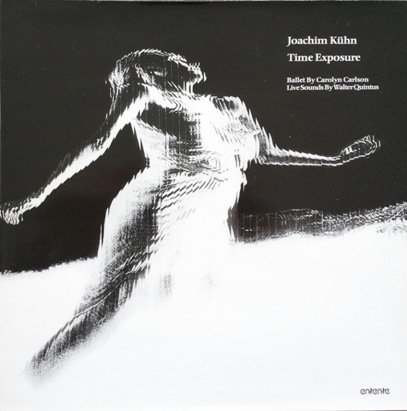
Joachim Kuhn - Time Exposure (GER 1987)


We've posted a number of genius German pianist J. Kuhn's works before and in fact completing his discography is not only desirable but quite tedious and expensive too.  This one attracted me because the music was created for a NYC ballet, and I really love ballet music with its extremely emotional, airy, and flickering variety.  In one track (To Be Continued) it appears someone is actually touching the strings (e.g. with a ruler) inside the grand piano that Kuhn is playing.

Here's a typical track, Modern Nature, the softest one:

And here one of the more experimental ones, Graphic:


Saturday, February 23, 2013

Compromis - Een Jobstijding (Neth, 1981)


I really love the cover of this record, which I'm pretty sure must be from a work by Gustave Doré, famous for his wood engravings.  Here you can get an idea of what I mean: http://dore.artpassions.net/   The choice and the drama of the unseen hands attempting to kidnap the baby from the mother are so incredibly evocative.  How often have I mentioned the importance of covers!
The music is very reminiscent to me of the Natdamperen material I posted so long ago now on this website, it could just as well be a fourth N. album, with fusiony jazz-jamming and raw laryngitis-like sax melodies.  It even has the same lo-fi 4-track basement-recording sound to it.  Most of the compositions are by the keyboardist, Ronald Buijk.

Friday, February 15, 2013

Häxmjölk‎ - "Eskimo Heat" (Sweden, 1976)


I think I posted this in bad rip form almost three years ago here.  So let's update it with a better.
We've heard a lot of music in that time haven't we?  A lot of great music, some amazing discoveries... a lot of crap too, necessarily.  I wager that in those 3 years we heard more new music than 99.9 % of humans hear in their entire lifetimes.  But of course we who do this and read this are not ordinary people-- for us music is our passion, our drug, our first love, the only taste of heaven we'll ever have on this earth (as I said before).

Here, the second track, "The Despirator" is utterly amazing.  Both this and "Flower of Eternity" are just ne plus ultra hallmarks of the complex and well-thought-out euro-fusion style.
Those minor second guitar arpeggios in the former song, perhaps invented by mahavishnu John McLaughlin originally (?) just kill me every time.  All compositions are by the guitarist Jan Tolf (he with the hooded monk's beard on the back).

Now prepare for The Despirator to run you over and leave you gasping:


Tuesday, February 12, 2013

J. Fiddy and O. Sieben -- Pastoral Scenes and Underscores (Library)


Another beautiful library album, a discovery from discobasso from growing bin.
Orchestral pieces often with a melancholy edge evoke a plushly verdant landscape, the irresistible earnestness so typical of this era in music almost could make one believe the earth was a garden of Eden, though one now deforested by diesel-powered caterpillar trucks for mining, logging, and clear-cutting to grow either palm oil (for your nutella sandwiches) or soybean for the export industry to go into the insatiable maw of the western world's frenzied desire for animal feed for hamburgers, biofuels to drive SUVs, and wood for cheap Ikea furniture destined for you Europeans and N. Americans… At least when we hear these songs we can remember there was a time when the planet (and our stereo) was pure and fresh and full of wildlife like frogs not yet decimated by chytrid fungus and fish not yet sickened by PCBs, and the woodland winds Fiddy and Sieben composed were not full of mercury particles from coal plants or nitrous oxides or CFCs designed to turn unprotected UV photons on caucasians into skyrocketing skin cancer statistics, nor could they truly have foreseen the 'continental sunset' they scored for the sonoton orchestra was the cultural sunset of your own western civilization designing its own gradual but certain demise in a plenitude of technocratic lassitude punctuated repeatedly with perpetually bored but impatient 'twitter feeds' along with instinctual overindulgence of every gluttonic form…
Anyways, it's a beautiful album!

Friday, February 01, 2013

Dean Rouch and Michael Mayer - Face of the Wind (USA, 1983)


Sometimes we fall in love with a record for no apparent reason, knowing it's not highly inventive or beautiful or impressive to the majority, like the Wolfgang Schmidt - Wolfhound I shared before in the past. Though it may seem average to you when you hear it, I don't want anyone to pass up the opportunity for this because it has some very wryly individual, interesting tracks, particularly the two prayers that close out each side.

As usual this was a discovery of the mighty osurec who first ripped this virtually unknown item some years back.  Side a is written by Dean Rouch (not Rough as it sometimes appears), and side b by Michael Mayer; the two sound very similar though.  Even the cover has a DIY charm to it, don't be surprised to hear it was Rouch who was responsible for the (exquisite?) drawing.  I love the lyrics too, the highly priceless zeitgeist comment: "I don't want to die in a nuclear war" from the A2 song "You're a Bitch" is exemplary--  try as I might I can't figure out how the title and the nuclear war reference fit together--  and pay attention to what Mayer is saying in his "Pentagon Prayer," (track B4) -- it's just wonderful.  (How it takes me back to those wonderful cold war days of Star Wars and SDI, ballistic intercontinental missiles, reaganomics and air traffic controller strikes, the 'evil empire', wall street masters of the universe and deregulation, and "it's morning again in America" -- which actually was devised years later as someone once corrected me -- doesn't matter, it's still clear by now that faint gloaming was really the last burst of energy at the end of a long day to which we now are turning in for a sleepless night.)

"When your peaceful nighttime silence explodes through a nuclear dawn
load the heart with errors and we can learn to sing along
and when the nuclear winds do come cold and your best friends are blowing away
perhaps if you can hold on to come and fight another day"
 --from " Pentagon Prayer "

The competence of the musicians is without question, all instruments are played beautifully with a lot of layered textures involving synths and guitar runs and scales in the arrangements.  Of course I'm not crazy about the silly Island song that starts off side b, nor the mandolin piece, but you couldn't expect a solid record from beginning to end at this late stage in the hunting game.

I will sample the most progressive tracks, the last song on side a which is a "power prayer,"  and the third song on side b, "Fly".
A4:


B3:


I would really love to hear from these guys to know what their thoughts are about this utterly unknown and lost private pressing, because I just adore it.  No chance it will score priority 2 on the cd reissue wishlist but why can't we see more records like this rereleased for 20 dollars, so we don't have to hunt down the vinyl and pay an arm and a leg for it to some random person in an auction?


Thursday, January 31, 2013

Jost Band - W.A.S.A. (We Are Still Alive) (GER, 1980)


One really doesn't know what to expect with these unknown records.  This is yet another find from the growing bin records store, that is, a find from discobasso. Not a well-known record as you can see here: http://rateyourmusic.com/artist/jost_band  (well, after I post the rip you will slowly see people claiming it as their own).  Nor is there even an entry for it on discogs:
http://www.discogs.com/artist/Jost+Band  save for their appearance in the wonderful compilation,  Nachwuchswettbewerb Pop '79 - Rock / Jazz, which featured great german artists Matter of Taste, Rozz, and Ex Ovo Pro.  I think there's a copy still available in basso's store but those records go quickly-- hurry if you want to pick it up.

So what about the music?  Setting aside the mildly ridiculous first song, I was excited at the hints of Zauberfinger with the adventurous but rock-based songwriting.  Of course this is not quite as good as the Hans Raffert work, but it is strong and interesting to listen to.  A couple of songs might even be the kind you play over and over again in the car on the long commute to work.  When I heard the second song I had to stop for a second, did he really say "Doctor doctor prescribe me your daughter?"  I will include it as a sample below, stay patient until the wonderful synths-draped ending in F sharp sustained.  Also the ninth song "Die Show" is amazing in its odd chord changes-- unfortunately it is marred by a trinnie drums intro that I probably should have removed.


Pinkel mir in den mund:


Die Show:


Monday, January 28, 2013

Håkon Graf, Jon Christensen, Hovensjø Sveinung ‎– Hideaway (Norway, 1982)


I guess these artists need no introduction, it may even be that some of you have heard this record already. But here I present a perfect new rip to do it justice.   Hakon appeared in the essential album "Blow Out" but you may not know he was also in the formidable Vanessa outfit that is also essential listening for progressive fusion fans, as well as Ruphus who put out many albums in the seventies.   (Those rhythm section dudes were on the Blow Out album too, the member they lost was guitarist Jon Eberson, so it's basically 75 % of the former.)

Is the progressive spirit cast off on this album as was true for so many artists at this time (e.g., Toto Blanke, Joachim Kuhn)? ...Kind of, but you be the judge.  In general this strays away from the high octane fusion into a more mellow, synths-heavy brew of warm chemicals.

Btw all tracks were written by Graf except the last one, a trad. norwegian folk song, arranged by him.
I sample below the most progressive number,  "Tender Stranger," with its interesting arpeggio modulations in and out of different keys.  ECM-style bass (could almost be Eberhard Weber) passes in and out of the shadows of the spacey synths veiling the electric piano like an aurora borealis.  Even more aurora appears on track A4, Open Mind, a blinding amount of it in fact, so pull out your sunglasses.

One big detraction, not only is side b short (under a quarter of an hour), but it's pretty uninteresting too in comparison to a.

A2: Tender Stranger:


Friday, January 25, 2013

Working Progress (FRA, 1976)

 
I will first quote from ashratom from his famed website where he featured well-nigh 2 years ago plus this little fusion one-off band, and when I read this I thought I must get a copy of this record.  Well it only took 2 years to get the vinyl but finally patience is rewarded with  rarities.
 
http://cdreissuewishlist.blogspot.ca/search/label/Working%20Progress

"As mentioned yesterday, we have a new patron of the CDRWL - The Alaskan Connection (no, it's not Sarah Palin). And here's his first submission. I wasn't familiar with it prior, not even on one of my many esoteric want lists. And of course guess who's involved? None other than Mr. Obscuria himself - J.P. Massiera.

This one starts off in the funky fusion style, but it's a head fake, something you can almost predict with Mr. Massiera. Within the album you'll find sweetly sung soft female vocals ala Cortex, indigenous islander music, a little Zeuhlish horns - flute and vocal piece, and even some straight jazz. For certain, all of that is fine and dandy, but it doesn't prepare you for the middle of the album with the lengthy West Indies tribal percussion and underground fuzz guitar soloing. This sequence elevates the album to a must listen experience, even it's not entirely consistent."
Thereupon he gave it a priority 3.

CREDITS:
Bass [Contrabass]– Bunny Brunel*
Bass, Vocals– A. Bonfils*
Choir– R. Ceccarelli
Drums– A. Ceccarelli*
Engineer [Sound Engineer]– Massiera J. Pierre*
Guitar– J. C. Chanavat*
Mixed By– Alain Tadie
Percussion– M. Delaporte*
Piano– F. Martin
Recording Supervisor– Claude Lemoine
Saxophone, Flute– J. David
Trombone– J. Costa (2)
Trumpet– R. Laily

Note the presence of A. Ceccarelli, who is all over fantastic fusion records from France.  Bassist Bunny Brunel also made a great fusion record called Touch in the late seventies.  If you love the french style of fusion to me this is absolutely a masterpiece, I sit back and hear the insane energy and creativity coming out the speakers and it takes me to paradise.  With the breathy sweet female vocals (oddly enough I don't see a credit for the female vocalist inside), the bits of composed passages, I think you get everything you want in one record in one package here.  My one complaint would be that it's quite short (being under half an hour) -- admittedly as was common for french albums.

Take a taste from track 2 with its absolutely anomalous but gorgeous modulations and changes:
"  I'm stretching my soul to make it sound like something...."  goes the bizarre commentary in the middle of the song.... dig it, man!!!


Tuesday, January 22, 2013

Schlachtvieh - Ein Rock-Oratorium Gegen den Krieg (GER, 1980)


A beautiful and extremely poetic but difficult album of various artists dedicated to the subject of war, it covers the full range of german styles with electronic, minimalist, hard krautrock, experimental, gentle flute-ballads, all flowing together from beginning to the shattering end.  Absolutely to me a masterpiece of progressive music at its finest, by the end it evokes a feeling similar to reading a hugely romantic and sprawling novel like something by Stendhal, or perhaps All Quiet on the Western Front.

So what about war (krieg) -- is the new current era of peace destined to last or will it shudder to a close when resource depletion, famines from climate change, etc., hit us really hard?  I think I mentioned before Harvard psychologist Steven Pinker's monumental evidence-stuffed book "Better Angels of our Natures" wherein he discusses the actual stats in favour of declining violence both within states and between states, i.e. wars, and that evidence is compelling.  Think about for ex. how casually bullying in schoolyards was treated as an issue even 10 - 20 years ago compared to today when it is taken very seriously indeed.  Now think of how much worse schoolyard bullying would have been 100 years ago or the analogous bullying 1000 years ago.

 I'm not religious, but the ancient mystery of why there is so much suffering in the world has a ready answer  from the scientific point of view in fact here the irony is that humans are able to appreciate the ideal contrasting with the reality of the universe we have been given, because the final answer is that each species suffers equally more or less due to the demands of competition for limited resources and this is mandated by the natural logic of evolution and the nature of life tied to the problem of the second law of thermodynamics that entropy must increase... that is, each lifeform necessarily must fight for itself and there cannot be any sustained abundance due to the limited energy flows. But there is double irony to that question which ancient theologians could not have foreseen, because in the 1960s it did become obvious to many scientists (and even politicians) that if we tackled the large system-wide (world) problems of overuse of resources, deterioration of natural environment, and population size, certainly the whole human population could live comfortably, middle-class-like, essentially forever with a size of the order 2-3 billion, and I include of course all inhabitants of India, China, and Africa. But this would have required dismantling the colonial predatory apparatus that put poor countries at a huge disadvantage compared to Europe and N. America. The whole of the 20th century is a history of how the rich enslaved the poor countries in various ways, esp. in Africa, where these poor countries upon gaining independence then got caught in the proxy cold war between the US and the USSR. Not only were they economically exploited in various ways, often merely so corrupt leaders could prosecute civil wars, they were overloaded with enormous quantities of weapons, and the opposing side invariably received an equal amount. So there is a sense to which you could say there really was no chance for that utopian ideal of the 1960s to happen, ever.  On the other hand, without the distraction of the cold war, I think we really could have considered seriously solving these system-wide problems in that era.

That is the modern irony: we could have ended suffering for all humans or at least the vast majority, and we blew it. Today I see that we are headed straight into a kind of funeral pyre, since by 2100 it is expected once again, since this prediction came out years ago, that the earth overall will be about 6 degrees C warmer. As usual expect the Africans in particular to suffer inordinately. We are thus following the worst case scenario predictions of the IPCC.

And in our hearts, we have to accept if we are honest this is not at all a surprise, since we have been doing this for so long aware of what is happening all around us. This is our future, that we have collectively chosen for ourselves and our children and grandchildren: The worst case scenario.


Thursday, January 17, 2013

KOM & Agit Prop - Väinämöisen soitto (Fin, 1977}


Our very own Mr. H. Morgan seems to be on a roll here, another hugely impressive gem appears as if out of the blue-- hard to understand why or how there could still be such masterpieces hidden in the darkness of oblivion after all the collecting and unearthing, but let the music stand as its own witness.

Here's a quick summary from RYM:
"Very jazzy, folky and rocky, so this must be good. Also, there's structures that resemble modern classical, and classical pop. Hard folk fusion with beautiful vocals, though the theme is anyway quite funny. First performed in 1974."

Musicians  (Please note the presence of one of the greatest fusion guitarist-composers in history in my opinion, Jukka Hauru:)

Bass – Tapani Tamminen
Chorus – Agit Prop-Kvartetti*
Composed By – Eero Ojanen
Drums – Ari Valtonen
Guitar – Jukka Hauru
Horn [Birch Bark Horn] – Erkki Saarela, Pekka Milonoff
Orchestra – KOM-Kvartetti
Piano – Eero Ojanen
Producer – Pekka Aarnio
Recorded By – Erkki Hyvönen, Harri Sutinen
Vocals – Martti Launis, Monna Kamu, Pekka Aarnio, Sinikka Sokka
Vocals [Elocutionist] – Marja-Leena Kouki

Full title of the album is: " Väinämöisen Soitto - Cantata for four singers and jazz quartet.  Two Communistic Protest Groups, KOM-kvartetti and Agit-Prop, made together this very special Fusion album without any political aspects of any sort."  -- Mr Morgan.
(In fact, it is based on the finnish national epic, the Kalevala, as he mentions in comments below.)

Isn't it amazing how that special human yearning for a perfect society made itself manifest in such a horrific way in the 20th century with the rise (and fall) of communism?  Yet this yearning is with us, in everyone, with conservatives who look to the past for perfection and  liberals who look forward to a utopia in the future. And this (to the evolutionist)  is part of the toolkit which natural selection put in our brains to make us work together better in a society full of individual actors with irregular actions, since we can always establish how imperfect human relations are in the present (in our surroundings) in comparison with the ideal we automatically, as it were, have in our imaginations.  Even young children understand this idea with their emphasis on equality.  In the same way when we look at human faces we are automatically at all times comparing with an unconscious " ideal "  face we hold in our minds.

Many thanks to Mr. Morgan for his sharing of this " ideal " record: "Jeder nach seinen Fähigkeiten, jedem nach seinen Bedürfnissen!" - Karl Marx


Sunday, January 13, 2013

Heikki Sarmanto - Open Ear (Fin, 1976)


From our finnish-irish friend Mr Morgan:

Composer and pianist Heikki Sarmanto is a leading Finnish jazz scene figure who has been internationally praised for his symphonic, orchestral and jazz ensemble works. During the early 1960s, Sarmanto studied at the Sibelius Academy in Finland. Shortly thereafter he won a prestigious award for the International Competition of Jazz Composition in Minneapolis, MN. He also performed in numerous Finnish jazz recordings including Christian Schwindt’s “For Friends and Relatives” (RCA Victor) and Esa Pethman’s “The Modern Sound of Finland” (RCA Victor).

Sarmanto entered the Berklee College of Music in Boston, in 1968 where he honed his piano and composition skills with coaching from Herb Pomeroy, Charlie Mariano and Margaret Chaloff. In 1969 he released the first recording under his own name in 1969 titled “Flowers in the Water” (EMI/Columbia), which was taken from a live recording at the University of Jyvaskyla.
In 1970, Sarmanto was chosen “Jazz Musician of the Year” in Finland. Back in Boston, he joined fellow musicians Lance Gunderson (guitar), Craig Herndon (drums), George Mraz (bass) and fellow Finn Juhani Aaltonen (saxophone) to record what would be released 38 years later as “Boston Date” (Porter Records). This quartet, with Pekka Sarmanto replacing George Marz, would be known as the “Serious Music Ensemble”. They would go on to record “Counterbalance” and “Like a Fragonard” (EMI/Odeon) in Finland. These two powerful recordings showcase both of Sarmanto’s amazing abilities as a piano player and composer. They incorporate elements of jazz, folk, improvisation and even rock to make a distinctive statement.

In 1971, he was awarded top honors at the Montreux Jazz Festival in both piano and combo categories. Sarmanto continued to record for EMI/Odeon with the big band recording “Everything is it”. Throughout the 70s, Sarmanto continued to record albums that ranged from big band to ...Expand to read entire bio >arrangements based upon poetry.

In the 80s, Mr. Sarmanto was chosen by Sonny Rollins to arrange and conduct his “Saxophone Concerto”, which premiered and was televised in Tokyo in 1986. Some of his key works include “New Hope Jazz Mass” dedicated to Duke Ellington and John Coltrane, which was received with unequivocal praise at the opening of Saint Peter's Church in New York, and also Suomi Symphony, which premiered to rave reviews at Carnegie Hall in 1988.

He was instrumental in founding the internationally lauded UMO Jazz Orchestra and was appointed its artistic director in 1999. Sarmanto headed the Jazz Studio at the Sibelius Academy which is highest institute of Finnish music and now home to the foremost jazz department in that nation.

Sarmanto's collaboration with Brazil's great lyricist, Fernando Brant, and the gifted guitarist-arranger, Juarez Moreira, resulted in the beautiful CD “A Lua Luara”. It featured one of Brazil's top vocalists, Claudya de Oliveira. Sarmanto is currently working with the famous French music publisher Alphonse Leduc to produce a CD and sheet music of his newest work titled “Impressions-Paris”, which includes 20 solo piano works. In 2008 Sarmanto composed the jazz opera “Manon”, which premiered in Estonia with great success.

He has toured the United States, Europe, Latin America, Asia and Africa and continues to actively expand his musical horizons. Porter Records along with Heikki Sarmanto and EMI Finland have begun to re-release a substantial body of Sarmanto’s previously unavailable early work for both the enjoyment of new and old enthusiasts of jazz.


Credits: Heikki Sarmanto - Piano , Electric Piano , Moog
Pekka Pöyry - Alto + Soprano Sax , Flute /
Pekka Sarmanto -Bass
Esko Rosnell - Drums & Percussion
Juha Björninen - Guitar

Maija Hapuoja - Vocals

Tuesday, January 08, 2013

A. Riccardo Luciani + Marco Melchiori - Inchiesta sul Mezzogiorno (Edizioni Ciclamino 101)


Happy new year to everyone and best of luck with all.... for my part the year 2012 was one of the most productive in music history and I'm hoping so will be 2013...

As far as I know, though I might be wrong, there were three library records this duo did in the seventies all in a very similar style.  The other 2 were posted on pornotrond's blog dusty shelf.
http://pornotrond.blogspot.ca/2012/08/ciclamino-marco-melchiori-r-luciani_16.html and the one before.  The other two are called Atmosfere and Aspetti della natura.

I realize I have said all of this before but I was shocked at the quality and great beauty of the compositions and did a search to see if there were missing records-- I know many times I've talked about how wonderful some of these library records can be, and I wish I was a specialist in the genre so as to understand what to look for (as with the great "contemporary contrasts" record), but I'm just following the others.

Note that side A is composed by A. Riccardo Luciani and side B by Marco Melchiori.
Those who don't have a taste for classical music in particular won't be too keen on side A, it's reminiscent of the Milan Pilar compositions from the older library I shared, "Pastoral Seasons."
Side B is electronic and keyboard music.
Between the two, I feel the former has a bit of a leg up.  Luciani has numerous credits if you scan his discography:
http://rateyourmusic.com/artist/a_r__luciani
Couldn't there be hidden gems in that list that we could bring to light?  As I said I wish I knew which are available to sample and which are still outstanding that might be gemological.

This third record in summary doesn't disappoint, it's exactly what I was expecting and I'm sure many out there will find it as soothing and peacefully relaxing in a very melancholy way, as I do.

Here's a good taste of the music from track A7 by Luciani:


And track B2 from Melchiori: