Thursday, January 31, 2013

Jost Band - W.A.S.A. (We Are Still Alive) (GER, 1980)


One really doesn't know what to expect with these unknown records.  This is yet another find from the growing bin records store, that is, a find from discobasso. Not a well-known record as you can see here: http://rateyourmusic.com/artist/jost_band  (well, after I post the rip you will slowly see people claiming it as their own).  Nor is there even an entry for it on discogs:
http://www.discogs.com/artist/Jost+Band  save for their appearance in the wonderful compilation,  Nachwuchswettbewerb Pop '79 - Rock / Jazz, which featured great german artists Matter of Taste, Rozz, and Ex Ovo Pro.  I think there's a copy still available in basso's store but those records go quickly-- hurry if you want to pick it up.

So what about the music?  Setting aside the mildly ridiculous first song, I was excited at the hints of Zauberfinger with the adventurous but rock-based songwriting.  Of course this is not quite as good as the Hans Raffert work, but it is strong and interesting to listen to.  A couple of songs might even be the kind you play over and over again in the car on the long commute to work.  When I heard the second song I had to stop for a second, did he really say "Doctor doctor prescribe me your daughter?"  I will include it as a sample below, stay patient until the wonderful synths-draped ending in F sharp sustained.  Also the ninth song "Die Show" is amazing in its odd chord changes-- unfortunately it is marred by a trinnie drums intro that I probably should have removed.


Pinkel mir in den mund:


Die Show:


Monday, January 28, 2013

Håkon Graf, Jon Christensen, Hovensjø Sveinung ‎– Hideaway (Norway, 1982)


I guess these artists need no introduction, it may even be that some of you have heard this record already. But here I present a perfect new rip to do it justice.   Hakon appeared in the essential album "Blow Out" but you may not know he was also in the formidable Vanessa outfit that is also essential listening for progressive fusion fans, as well as Ruphus who put out many albums in the seventies.   (Those rhythm section dudes were on the Blow Out album too, the member they lost was guitarist Jon Eberson, so it's basically 75 % of the former.)

Is the progressive spirit cast off on this album as was true for so many artists at this time (e.g., Toto Blanke, Joachim Kuhn)? ...Kind of, but you be the judge.  In general this strays away from the high octane fusion into a more mellow, synths-heavy brew of warm chemicals.

Btw all tracks were written by Graf except the last one, a trad. norwegian folk song, arranged by him.
I sample below the most progressive number,  "Tender Stranger," with its interesting arpeggio modulations in and out of different keys.  ECM-style bass (could almost be Eberhard Weber) passes in and out of the shadows of the spacey synths veiling the electric piano like an aurora borealis.  Even more aurora appears on track A4, Open Mind, a blinding amount of it in fact, so pull out your sunglasses.

One big detraction, not only is side b short (under a quarter of an hour), but it's pretty uninteresting too in comparison to a.

A2: Tender Stranger:


Friday, January 25, 2013

Working Progress (FRA, 1976)

 
I will first quote from ashratom from his famed website where he featured well-nigh 2 years ago plus this little fusion one-off band, and when I read this I thought I must get a copy of this record.  Well it only took 2 years to get the vinyl but finally patience is rewarded with  rarities.
 
http://cdreissuewishlist.blogspot.ca/search/label/Working%20Progress

"As mentioned yesterday, we have a new patron of the CDRWL - The Alaskan Connection (no, it's not Sarah Palin). And here's his first submission. I wasn't familiar with it prior, not even on one of my many esoteric want lists. And of course guess who's involved? None other than Mr. Obscuria himself - J.P. Massiera.

This one starts off in the funky fusion style, but it's a head fake, something you can almost predict with Mr. Massiera. Within the album you'll find sweetly sung soft female vocals ala Cortex, indigenous islander music, a little Zeuhlish horns - flute and vocal piece, and even some straight jazz. For certain, all of that is fine and dandy, but it doesn't prepare you for the middle of the album with the lengthy West Indies tribal percussion and underground fuzz guitar soloing. This sequence elevates the album to a must listen experience, even it's not entirely consistent."
Thereupon he gave it a priority 3.

CREDITS:
Bass [Contrabass]– Bunny Brunel*
Bass, Vocals– A. Bonfils*
Choir– R. Ceccarelli
Drums– A. Ceccarelli*
Engineer [Sound Engineer]– Massiera J. Pierre*
Guitar– J. C. Chanavat*
Mixed By– Alain Tadie
Percussion– M. Delaporte*
Piano– F. Martin
Recording Supervisor– Claude Lemoine
Saxophone, Flute– J. David
Trombone– J. Costa (2)
Trumpet– R. Laily

Note the presence of A. Ceccarelli, who is all over fantastic fusion records from France.  Bassist Bunny Brunel also made a great fusion record called Touch in the late seventies.  If you love the french style of fusion to me this is absolutely a masterpiece, I sit back and hear the insane energy and creativity coming out the speakers and it takes me to paradise.  With the breathy sweet female vocals (oddly enough I don't see a credit for the female vocalist inside), the bits of composed passages, I think you get everything you want in one record in one package here.  My one complaint would be that it's quite short (being under half an hour) -- admittedly as was common for french albums.

Take a taste from track 2 with its absolutely anomalous but gorgeous modulations and changes:
"  I'm stretching my soul to make it sound like something...."  goes the bizarre commentary in the middle of the song.... dig it, man!!!


Tuesday, January 22, 2013

Schlachtvieh - Ein Rock-Oratorium Gegen den Krieg (GER, 1980)


A beautiful and extremely poetic but difficult album of various artists dedicated to the subject of war, it covers the full range of german styles with electronic, minimalist, hard krautrock, experimental, gentle flute-ballads, all flowing together from beginning to the shattering end.  Absolutely to me a masterpiece of progressive music at its finest, by the end it evokes a feeling similar to reading a hugely romantic and sprawling novel like something by Stendhal, or perhaps All Quiet on the Western Front.

So what about war (krieg) -- is the new current era of peace destined to last or will it shudder to a close when resource depletion, famines from climate change, etc., hit us really hard?  I think I mentioned before Harvard psychologist Steven Pinker's monumental evidence-stuffed book "Better Angels of our Natures" wherein he discusses the actual stats in favour of declining violence both within states and between states, i.e. wars, and that evidence is compelling.  Think about for ex. how casually bullying in schoolyards was treated as an issue even 10 - 20 years ago compared to today when it is taken very seriously indeed.  Now think of how much worse schoolyard bullying would have been 100 years ago or the analogous bullying 1000 years ago.

 I'm not religious, but the ancient mystery of why there is so much suffering in the world has a ready answer  from the scientific point of view in fact here the irony is that humans are able to appreciate the ideal contrasting with the reality of the universe we have been given, because the final answer is that each species suffers equally more or less due to the demands of competition for limited resources and this is mandated by the natural logic of evolution and the nature of life tied to the problem of the second law of thermodynamics that entropy must increase... that is, each lifeform necessarily must fight for itself and there cannot be any sustained abundance due to the limited energy flows. But there is double irony to that question which ancient theologians could not have foreseen, because in the 1960s it did become obvious to many scientists (and even politicians) that if we tackled the large system-wide (world) problems of overuse of resources, deterioration of natural environment, and population size, certainly the whole human population could live comfortably, middle-class-like, essentially forever with a size of the order 2-3 billion, and I include of course all inhabitants of India, China, and Africa. But this would have required dismantling the colonial predatory apparatus that put poor countries at a huge disadvantage compared to Europe and N. America. The whole of the 20th century is a history of how the rich enslaved the poor countries in various ways, esp. in Africa, where these poor countries upon gaining independence then got caught in the proxy cold war between the US and the USSR. Not only were they economically exploited in various ways, often merely so corrupt leaders could prosecute civil wars, they were overloaded with enormous quantities of weapons, and the opposing side invariably received an equal amount. So there is a sense to which you could say there really was no chance for that utopian ideal of the 1960s to happen, ever.  On the other hand, without the distraction of the cold war, I think we really could have considered seriously solving these system-wide problems in that era.

That is the modern irony: we could have ended suffering for all humans or at least the vast majority, and we blew it. Today I see that we are headed straight into a kind of funeral pyre, since by 2100 it is expected once again, since this prediction came out years ago, that the earth overall will be about 6 degrees C warmer. As usual expect the Africans in particular to suffer inordinately. We are thus following the worst case scenario predictions of the IPCC.

And in our hearts, we have to accept if we are honest this is not at all a surprise, since we have been doing this for so long aware of what is happening all around us. This is our future, that we have collectively chosen for ourselves and our children and grandchildren: The worst case scenario.


Thursday, January 17, 2013

KOM & Agit Prop - Väinämöisen soitto (Fin, 1977}


Our very own Mr. H. Morgan seems to be on a roll here, another hugely impressive gem appears as if out of the blue-- hard to understand why or how there could still be such masterpieces hidden in the darkness of oblivion after all the collecting and unearthing, but let the music stand as its own witness.

Here's a quick summary from RYM:
"Very jazzy, folky and rocky, so this must be good. Also, there's structures that resemble modern classical, and classical pop. Hard folk fusion with beautiful vocals, though the theme is anyway quite funny. First performed in 1974."

Musicians  (Please note the presence of one of the greatest fusion guitarist-composers in history in my opinion, Jukka Hauru:)

Bass – Tapani Tamminen
Chorus – Agit Prop-Kvartetti*
Composed By – Eero Ojanen
Drums – Ari Valtonen
Guitar – Jukka Hauru
Horn [Birch Bark Horn] – Erkki Saarela, Pekka Milonoff
Orchestra – KOM-Kvartetti
Piano – Eero Ojanen
Producer – Pekka Aarnio
Recorded By – Erkki Hyvönen, Harri Sutinen
Vocals – Martti Launis, Monna Kamu, Pekka Aarnio, Sinikka Sokka
Vocals [Elocutionist] – Marja-Leena Kouki

Full title of the album is: " Väinämöisen Soitto - Cantata for four singers and jazz quartet.  Two Communistic Protest Groups, KOM-kvartetti and Agit-Prop, made together this very special Fusion album without any political aspects of any sort."  -- Mr Morgan.
(In fact, it is based on the finnish national epic, the Kalevala, as he mentions in comments below.)

Isn't it amazing how that special human yearning for a perfect society made itself manifest in such a horrific way in the 20th century with the rise (and fall) of communism?  Yet this yearning is with us, in everyone, with conservatives who look to the past for perfection and  liberals who look forward to a utopia in the future. And this (to the evolutionist)  is part of the toolkit which natural selection put in our brains to make us work together better in a society full of individual actors with irregular actions, since we can always establish how imperfect human relations are in the present (in our surroundings) in comparison with the ideal we automatically, as it were, have in our imaginations.  Even young children understand this idea with their emphasis on equality.  In the same way when we look at human faces we are automatically at all times comparing with an unconscious " ideal "  face we hold in our minds.

Many thanks to Mr. Morgan for his sharing of this " ideal " record: "Jeder nach seinen Fähigkeiten, jedem nach seinen Bedürfnissen!" - Karl Marx


Sunday, January 13, 2013

Heikki Sarmanto - Open Ear (Fin, 1976)


From our finnish-irish friend Mr Morgan:

Composer and pianist Heikki Sarmanto is a leading Finnish jazz scene figure who has been internationally praised for his symphonic, orchestral and jazz ensemble works. During the early 1960s, Sarmanto studied at the Sibelius Academy in Finland. Shortly thereafter he won a prestigious award for the International Competition of Jazz Composition in Minneapolis, MN. He also performed in numerous Finnish jazz recordings including Christian Schwindt’s “For Friends and Relatives” (RCA Victor) and Esa Pethman’s “The Modern Sound of Finland” (RCA Victor).

Sarmanto entered the Berklee College of Music in Boston, in 1968 where he honed his piano and composition skills with coaching from Herb Pomeroy, Charlie Mariano and Margaret Chaloff. In 1969 he released the first recording under his own name in 1969 titled “Flowers in the Water” (EMI/Columbia), which was taken from a live recording at the University of Jyvaskyla.
In 1970, Sarmanto was chosen “Jazz Musician of the Year” in Finland. Back in Boston, he joined fellow musicians Lance Gunderson (guitar), Craig Herndon (drums), George Mraz (bass) and fellow Finn Juhani Aaltonen (saxophone) to record what would be released 38 years later as “Boston Date” (Porter Records). This quartet, with Pekka Sarmanto replacing George Marz, would be known as the “Serious Music Ensemble”. They would go on to record “Counterbalance” and “Like a Fragonard” (EMI/Odeon) in Finland. These two powerful recordings showcase both of Sarmanto’s amazing abilities as a piano player and composer. They incorporate elements of jazz, folk, improvisation and even rock to make a distinctive statement.

In 1971, he was awarded top honors at the Montreux Jazz Festival in both piano and combo categories. Sarmanto continued to record for EMI/Odeon with the big band recording “Everything is it”. Throughout the 70s, Sarmanto continued to record albums that ranged from big band to ...Expand to read entire bio >arrangements based upon poetry.

In the 80s, Mr. Sarmanto was chosen by Sonny Rollins to arrange and conduct his “Saxophone Concerto”, which premiered and was televised in Tokyo in 1986. Some of his key works include “New Hope Jazz Mass” dedicated to Duke Ellington and John Coltrane, which was received with unequivocal praise at the opening of Saint Peter's Church in New York, and also Suomi Symphony, which premiered to rave reviews at Carnegie Hall in 1988.

He was instrumental in founding the internationally lauded UMO Jazz Orchestra and was appointed its artistic director in 1999. Sarmanto headed the Jazz Studio at the Sibelius Academy which is highest institute of Finnish music and now home to the foremost jazz department in that nation.

Sarmanto's collaboration with Brazil's great lyricist, Fernando Brant, and the gifted guitarist-arranger, Juarez Moreira, resulted in the beautiful CD “A Lua Luara”. It featured one of Brazil's top vocalists, Claudya de Oliveira. Sarmanto is currently working with the famous French music publisher Alphonse Leduc to produce a CD and sheet music of his newest work titled “Impressions-Paris”, which includes 20 solo piano works. In 2008 Sarmanto composed the jazz opera “Manon”, which premiered in Estonia with great success.

He has toured the United States, Europe, Latin America, Asia and Africa and continues to actively expand his musical horizons. Porter Records along with Heikki Sarmanto and EMI Finland have begun to re-release a substantial body of Sarmanto’s previously unavailable early work for both the enjoyment of new and old enthusiasts of jazz.


Credits: Heikki Sarmanto - Piano , Electric Piano , Moog
Pekka Pöyry - Alto + Soprano Sax , Flute /
Pekka Sarmanto -Bass
Esko Rosnell - Drums & Percussion
Juha Björninen - Guitar

Maija Hapuoja - Vocals

Tuesday, January 08, 2013

A. Riccardo Luciani + Marco Melchiori - Inchiesta sul Mezzogiorno (Edizioni Ciclamino 101)


Happy new year to everyone and best of luck with all.... for my part the year 2012 was one of the most productive in music history and I'm hoping so will be 2013...

As far as I know, though I might be wrong, there were three library records this duo did in the seventies all in a very similar style.  The other 2 were posted on pornotrond's blog dusty shelf.
http://pornotrond.blogspot.ca/2012/08/ciclamino-marco-melchiori-r-luciani_16.html and the one before.  The other two are called Atmosfere and Aspetti della natura.

I realize I have said all of this before but I was shocked at the quality and great beauty of the compositions and did a search to see if there were missing records-- I know many times I've talked about how wonderful some of these library records can be, and I wish I was a specialist in the genre so as to understand what to look for (as with the great "contemporary contrasts" record), but I'm just following the others.

Note that side A is composed by A. Riccardo Luciani and side B by Marco Melchiori.
Those who don't have a taste for classical music in particular won't be too keen on side A, it's reminiscent of the Milan Pilar compositions from the older library I shared, "Pastoral Seasons."
Side B is electronic and keyboard music.
Between the two, I feel the former has a bit of a leg up.  Luciani has numerous credits if you scan his discography:
http://rateyourmusic.com/artist/a_r__luciani
Couldn't there be hidden gems in that list that we could bring to light?  As I said I wish I knew which are available to sample and which are still outstanding that might be gemological.

This third record in summary doesn't disappoint, it's exactly what I was expecting and I'm sure many out there will find it as soothing and peacefully relaxing in a very melancholy way, as I do.

Here's a good taste of the music from track A7 by Luciani:


And track B2 from Melchiori:


Saturday, December 29, 2012

Musik Szene Saar II (Germ., 1981)


Back when the growing bin blog was going strong with beautiful german and other seventies albums, one of my favourites posted was discobasso's Musik Szene Saar I album, which you can read here:
http://thegrowingbin.blogspot.ca/2011/02/musik-szene-saar.html
I can't believe this was already almost 2 years ago!

It was a very uneven recording, but there were some really gorgeously progressive tracks on it that really blew me away.  I didn't know there was a second one from a year later until it was featured for sale on his record store site.
For me the best tracks are from the soul-rock group Double You, which according to rateyourmusic and discogs never did a full album, and the folk quartet Ambi and Arno, same story, no record according to those sites, just the tracks on these two compilations.  If this is true and complete, it's tragic these talented groups never got to record albums.

Then there was just a shockingly RIO-esque prog number by Wolfgang Brendel with the most awesome dissonances and tritones.  This guy unfortunately doesn't appear on this second record.
http://rateyourmusic.com/artist/wolfgang_brendel

Needless to say, the second edition is not as good as the first, but I had to get it out of curiosity.  It's quite possible most will not enjoy it so much, other than the true german rock music fans, of which I'm a big one.  But every once in a while a true gem appears from that period, in that country, that is completely unknown, so the search goes on.... 

The best track to me is from the hard rock band called Lancelot, their track 9, Danger in Sky, I feature here:


Thursday, December 13, 2012

Wake up and.... Jazzy (Macedonia or Yugo?, 198?)


For the edification of the confused, the country ascription above is due to the fact the album was recorded in Macedonia (as you can see from the back cover) by Yugoslav (specifically, Serbian) musicians.  Macedonia is a small country just north of Greece which has nothing to do with the former Yugoslavia obviously, geographically, I say this due to some confusion in the comments below created by someone who probably doesn't understand English too well.  Or if they do understand English they don't read well, or perhaps, have trouble comprehending.  Or are simply out to catch me even at the cost of making a mistake.  Something like that.  At any rate this record was posted before on the website yugojazz -- which I figured was likely because it's hard to find any yugo-related material not yet posted online.  My mistake for thinking I had found something original!

This record reminds me a bit of Kjol's stuff with its intense fusionary output from a quartet of wonderful musicians and its 'updated' eighties style of breathy jazz.  I'm surprised it's not better known considering how good the music is.  There is some experimental stuff in here too, and very little of the conventional (jazzy or bluesy standards) -- if at all.

The start of track 5 sampled below features some really oddly ahead of its time distorted vocals behind the furiously fast pianist runs.  Notice the synths behind him blowing as if in a wind chamber.

Really remarkable find, again from the growing bin record store.  I will repeat how amazing it is to see so many rare and marvellous gems in one place and at such affordable prices compared to many an online record store.

The stars are Milos Petrovic the pianist, and Rade Bulatovic the bassist.  They are rounded out by Jovan Maljokovic on tenor sax and Miroslav Karlovic on drums.

Track 5, Mondovisia from Milos Petrovic:


Monday, December 10, 2012

Chettini and The Turkish Trio - "Oriental Soul" {France} [1972] turkish psychedelic folk/funk

this album was in my wishlist for a very long time, since the day, i saw it on ebay's lp listings.. since the lp released in france; even in turkey, very few aware the existence of this album. there are zillions of okay albums made in 70s' turkey, which try to benefit from country's authentic value, but musically somewhat dull. believe me this one is different. a hidden treasure for the lovers of turkish funky folky jazzy fussion of 70s.. the only information that we know about Çetin Bükey is that he played flute and clarinet at 1965's Altin Mikrofon Contest (a music contest annually held between 1965-1968 in Turkey organized by the newspaper Hürriyet) as a member of the Ferdi Özbegen Orchestra.


Bağdat..

Enjoy!

Friday, December 07, 2012

Mwendo Dawa ST (Swed, 1981)


After the VA record I tried looking for more from this swedish jazz band with mild fusionary tendencies.  I believe in online record stores this is referred to as fusion simply because a so-used label sells better than 'acoustic jazz' which is what this really is for the most part, with the exception of some nice synth work.  I really love the way Susanna washes her synths into the pieces in that atmospheric, cloud-like kind of way, big thick chords flowing over the surface of the beat like white reflections moving on a turmoiled ocean.   Unfortunately for me there isn't enough of this effect, only sparingly employed.

This was recorded April 20-21, 1980, in Stockholm.  The Mwendo Dawa (in Swahili: the way to a special goal) players are:
Ove Johansson - tenor sax
Susanna Lindeborg - keys
Ulf Wakenuis - guitars
Anders Jormin - bass
David Sundby - drums
Not too sure what you guys opine but I don't think I'll go out of my way to find any remaining of their records, I think I'll leave the rest for true completists in jazz only.  Is it surprising I can be turned off by 'too much jazziness?'  It shouldn't be, I love fusion for its progressive moves, but my heart is in prog.  Note that this band is still very active, one of the few from this period that continued almost verbatim through to the present era.  This particular record is OOP of course and not currently available online or on cd.
http://www.lj-records.se/mwendo.html


On track 5, a good ex. of Susanna's synthwork:


Thursday, December 06, 2012

Media - Realite (FRA 1980)


Highly reminiscent to me of the Phileas Fogg record I posted some time back, but with much less jazziness in it.  A few songs have a bit of reggae-tinged beat as might be expected for this time period, & quite a bit of new wave influence here, like zauberfinger.  Unfortunately the female vocalist is nowhere as beautifully endowed laryngeally as Phileas Fogg's.   For the progressive fan, be patient at the start -- you will be rewarded towards the end of side 1 moving on to side 2, with some unusual chord changes and melodies.

The band is led by Jean Launay, who plays drums, synths, and organs, and contributes vocals, and Ghislaine Clavier, responsible for the vocals.  This couple is credited with the arrangements, production, and compositions.  Album was recorded in Toulouse, March 1980.  Rounding out the band are Remy Chebr on bass, Antonio Gomez and Serge Faubert on guitars, Jean Labelle, Jean-Claude Cruciati and Patrick Double on piano (on different tracks) and synths, & Jean Ribul on trumpets.  This should be a nice break for those not so much into the fusion and jazzier stuff that I am apparently addicted to on this blog.  It's too bad our beautiful princess of prog Isabel has kept a low profile of late since she was so good at ferreting out the rockier albums for sharing.

Wednesday, December 05, 2012

Tony DuPuis - Night Visions (USA, 1985)


In the last post our Master Shige talked about when one is feeling down-- what to do?

For myself, there is no feeling like hearing the postman ringing, or coming home to see a record in my mailbox.  When this happens twice in one day, there's nothing like it.  (I hope out there others will feel inspired to feel the same, buying and ripping rare records.)  Yesterday this was exactly what I needed, with (what is a common experience) unpleasantness and bad feelings at work, followed by a record at my door.

"Welcome to a day in my life.  'Night Visions' is a concept album written as my perception of life.  We live in a fast-paced society and sometimes forget the meaning of tranquility.  The music on this album is an example of these times and how we must, through our most trying times, go on living with love for fellow man and self through tranquility and awareness."  T.D.

Very well said and something always worth remembering in this day of "social media" especially.  Taking a break from everything to think about why we are here, who we really are, or who we are to others around us, and what are we to do with the problems everywhere around small and large, is the most important duty for all of us.  Because then for my part I realize I want to be remembered as someone who made others feel better in some way, small as it may be, whoever they might be-- I say this without arrogance, meaning only that if I'm to leave this earth tomorrow at least it will be mostly positivity I will leave behind (I hope).

In this mid-80s private pressed fusion outing, Tony on piano, synths, and percussion, is accompanied by James Marshall - Trumpet, Perc; Dixon Shanks - Sax, Flutes; James Ranka - keys; Brain Robinson - Bass; Wally Parks - Vibes; Donny Todd - Trombone; and Jay Eker on Bass.  All the songs were written by Tony except the second one co-written with Ranka.  The sound is very similar to Mike Elliott's Diffusion but updated by a few years into the more smooth fusion era.  A couple of songs get pretty adventurous and progressive and you will surely notice these when you hear them.

Tuesday, December 04, 2012

Beltane Fire "Different Breed "(1985,UK,pomp)


Beltane Fire "Different Breed "(1985,UK,pomp)


This album might cheer you up when you feel dissapointed or downer.
Excellent pomp album from UK released in 1985.
Beltane Fire released this sole album and some singles.

RYM

track2

Tuesday, November 27, 2012

Wiebelfetzer Live (Swiss 1971)


This album was posted long ago in poor rip and I feel it really deserves better, being an astonishing combination of fusion, modern classical, jazz, and that ethnic component typical of advanced Germanic music, a bit zeuhlish almost.  It's surprising this was made in 1971.  Like Soft Machine 3, it's a double-LP with each side featuring one track.  On the back is written the following:  "we are very happy to present to you this unique double-album based on an idea by bacillus..." It was recorded live in Zurich at Weisser Wind, which is across from the old railroad station by the large Zuhaftingsalter Timepiece...
...This reminds me of a time just after reunification in the late eighties when I was invited to the former East Germany as resident privatsdocent in biermeister wissenschafts, near the town of Neuschwanbergendorferingen which featured a similar timepiece at its old station.  I was cordially invited for a prospectus in the Schaftsingencollegeschellsteintungserstellensgymnasium, which in English, you know as a co-op.  It was curious to observe towards the twilight hour the pedestrians, often quite tipsy or even drunk on weissbier (of which the local one was notorious for its ability to remove the panties from young female students) waiting at the lights across the highway which often took some 5-6 minutes to change.  Of course, as a westerner, I would attempt a crossing as soon as I saw there were no cars coming.  Immediately some Bürgermeister would wag his long finger at me and comment, "ach no! it is not permitted to cross on das roten licht…! "
To which I would reply, "pardon me sir, there is no car coming, as you may easily observe, not even a lada, and it is a wonderful warm night... it is better to cross than to remain here waiting. Please, good night Herr B... Guten nacht."
Immediately with his cane across my nipples he would stop me, "no sir! where are you from? one does not cross here upon the red.  This is VERBOTEN! "

I laughed gently, "sir, this is the night of quiet and we have had a bit too much perhaps to drink.. I shall proceed on my way with your kind forbearance upon the wings of my Erdinger ..."
Then, a local politician well-known in these parts for his war service in the underground naked-molerat burrows who had been listening quietly decided to speak up.
"Sir!!  Herr K.!! you are not from here, are you!! perhaps you laugh at us simple townsfolk. Yes, we are unsophisticated, not like you. We stand at the red lights and do not cross.  Even, some among us are mentally retarded [here he pointed out a teen chomping on a knackwurst who evidently had Down's Syndrome] -- even some of us are mental defectives [here he pointed towards an empty spot-- which occasioned my surprise, to which he replied immediately with] Ach! again I see Hans, the village idiot, is on stress leave!"
"stress leave?"
"yes!  in Germany, these village idiots are now unionized-- they are permitted 452 days of sick leave per year!"  whereupon I remarked in utmost perplexity:
"452 days--?"
"Sir!! you forget: they are a union of idiots!! -- as I was saying, in our town, we have multiple mental defectives, prone to long incurable stays in mental asylums of which there are more than four hundred in the area.  But listen here!"  and his face was contorted with rage, almost a centimeter away from me, so close one of his head lice made the long desperate plunge onto my neatly-combed hair and my alcohol-dulled reflexes were too slow to trap it in my teeth:
"But--- We are in Germany here!  Wir sind in Deutschland!  We DO NOT CROSS!!! NEIN!!!!"
Suddenly the others who by now numbered in the dozens (as the light still had not changed) would crowd me, in a riot of angry faces as if in a painting by H. Bosch with twisted expressions of murderous rapture, telling me to stop and forbear.  At that time almost the entire town including the wet-nurses with their milk-laden breasts were standing there. I would then observe a grandmother in a wig and hair-net, an angry red-haired lady with a large potbelly and bunions of equal size exclaim:
"sir ! you have no children, ja ? "
"pardon me, madam, no I am not yet blessed with these beasts at this time " I dutifully replied.
She would then continue,
"You must not cross! for you are a poor example to the children of our town !  See here!! " At which she would point out the long-haired puppet called der Struwwelpeter in the nearby toy store for want of a better example (who to this day still gives me feverish nightmares).  Suddenly, a drunken 10-year-old did in fact appear and shook his head at me, sadly, for attempting to cross, before proceeding into a large mountain in pursuit of a pied flautist.
By now angry, I yelled, "A pox upon you townsfolk!!!" -- and,  "I shall be too old for children by the time this light changes!!!"
"You shall not cross this light!"  the townspeople yelled in unison, all of them there, as if in a general assembly, some in their nightshirts, night-hats, and night-skiboots.
"I shall indeed!" I answered, badly needing to deprive my kidneys of their precious yellow nectar. But still they all blocked me in an impasse of contorted and stuporous bodies... and then, the witch screamed out,
"Cross---  AND YOU SHALL NOT HAVE CHILDREN!! "

Today, of course, I still stand at that red light, waiting for it to change… still waiting…
and I and frau K. do have children or kinder as we ironically call them in our language (which wild animals, I am loathe to admit, have indeed cursed our lives as the witch foretold)  -- and how I wish that light would change!!!
ach--deutsche burokratie!!!

Wednesday, November 21, 2012

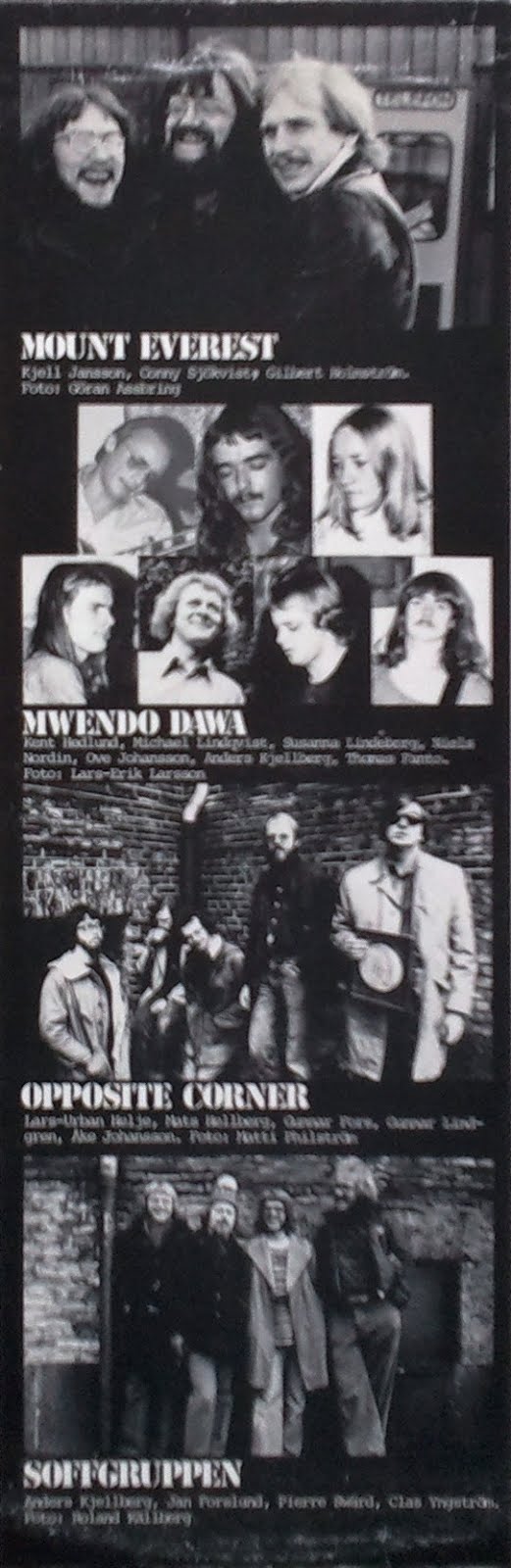
Mount Everest, Mwendo Dawa, Opposite Corner, Soffgruppen - Det Nyjazzte Från Göteborg (1977, Sverige)


Not the most beautiful album cover artwork this time.

I'm back from a nice relaxing holiday with empty pockets and this one fusion outing from VA in the city of Goteborg, Sweden-- note the presence of huge jazz artists Mount Everest (featured on this website before) and Soffgruppen, one of the greatest fusion bands out of all Scandinavia (in my opinion).   Disappointingly the last track, by this last mentioned, is a free jazz improv and is quite meandering, never really building to the climax one is getting excited for...

Now I have to get back to work to pay for our crazy spending (not entirely my wife's fault this time) as well as the next holiday and bunch of records. Oh boy, looks like the kids won't be getting much for christmas.

Thursday, November 15, 2012

Michal Urbaniak "Daybreak" (1981,Poland,Fusion,Jazz Rock)

Michal Urbaniak "Daybreak" (1981,Poland,Fusion,Jazz Rock)


Among his albums,"Fusion Ⅲ"(1975) may be the best album for prog fans,but this "Daybreak" will be also liked by prog fans .

Discogs

track2

Tuesday, November 06, 2012

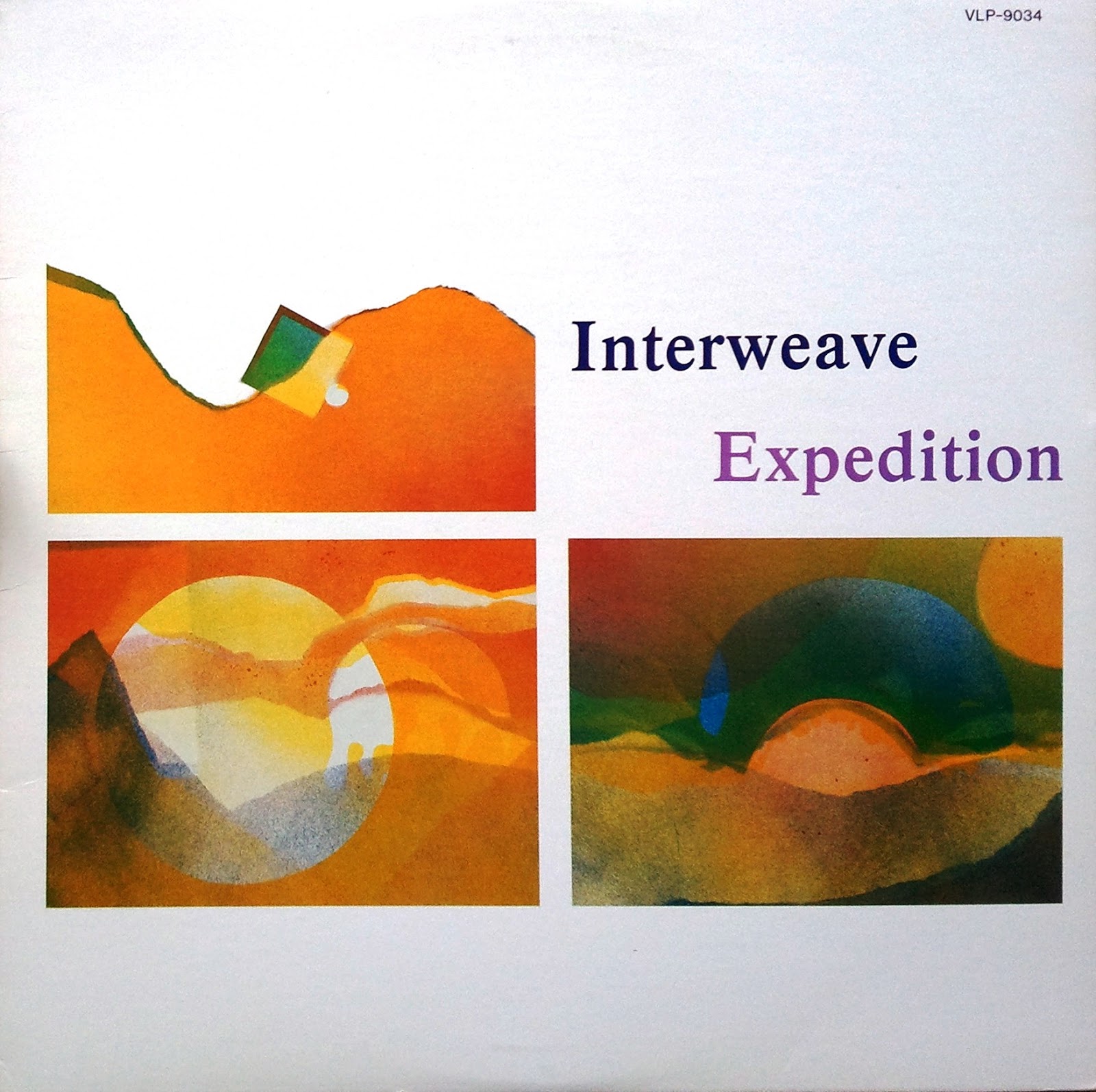
Interweave 1986


When I saw the fantastic new website dedicated to rare dutch material from the golden age of progressive rock:
I was reminded of this great record of acoustic guitar mixed with choral (as in the classical form of music) with the gorgeous medieval cover.  I was surprised to see on rateyourmusic they had made a second album called Expedition so immediately I tried to track it down--  thus, here I present to you the two records from Interweave...
 
Unfortunately the Expedition as you will see is simply jazz piano with bass, drums backing, from a trio that hails from New York.   I see it was on faraone's wishlist but I trust it no longer will be soon.  Please contact me if anyone still does want it.  Their record was recorded in Onoeonta NY with Frank Giasullo as the composer and pianist, in style he reminds me a lot of 70s Keith Jarrett in his gospel moods though without the fiercely incontrollable imaginativeness.  It's the other ST Interweave from Holland that is the masterpiece as you will soon see.  It was recorded in 1985 but put out in 1986, and the american album was recorded in early 1986, so really they're both from the same year but different continents.  This post is dedicated to DPP.


Here's my favourite track from American Interweave, "A Good Question"


And one from netherlandish Interweave:


Monday, November 05, 2012

John Macey – More Notes For Your Money (1987,USA,Guitar fusion)


John Macey – More Notes For Your Money (1987,USA,Guitar fusion)


This is John Macey's second release (.4 tracks single).

This rip is the same as here .
Thanks to the original uploader ,we can enjoy his other masterpiece work.
However,
After listening to it many times,I hoped to remaster the file .
The file remastered here is ..... some pops and crackles were removed and easier to listen to.(Track 4 's noises could not be removed a lot unfortunately ....)
I appreciate the original uploader for real, and do hope John Macey in Heaven will be satisfied with my remastering and this USA's talented but unknown guitarist's name will be known to all over the world.


track1


Wednesday, October 31, 2012

Mr. Euphoria (USA, 1983)


Continuing on with American guitar-prog rarities in honour of the upcoming election in the United States, for which I strongly encourage all registered voters and registered nonvoters to go out and vote as soon as possible in yet another useless exercise of wasted time and unnecessary energy so the haughty political oligarchy or rather plutocratic ruling class can feel justified to do whatever it wishes with no regard whatsoever for human beings or their environment (and to think they used to laugh at communist countries for their useless preordained elections--  now you get two identical parties to choose from instead of just one-- woo-hoo!)--  here's the album that to me seemed like a progressive masterpiece utterly lost to time and even to prog fans.  [Footnote: What we need is a real "truth party" that could state the obvious: this is all a vacuous diversion so power can remain with the top point one percenters and the corporations they are eternally married to 'till death do us part'.]

Very simply, this sounds like the tightest, hardest, no-fat version of mid-seventies king crimson you could imagine, as if the great Fripp was totally focussed on song-writing and brutally keen on cutting out all filler, chamber pretensions, and excess frippery. Track 3 (1 Day 1 Month 1 Year) even features some of that trademark staccato Fripp guitar style. 

All songs are instrumentals powered forward by fully-automatic electric guitar chainsaw action.  Occasionally there is a touch of synthesizer (also played by the formidable guitarist, whose name is Richard Rhodes.  His backing band consists of Gordon Rhodes on drums (sib?), Tim Sanz on bass, guest Eric Petersen on synths for track 5.  Tracks 2, 5, 7 are compositions by Sanz and the rest is credited to R. Rhodes.) The energy and tritones never really let up until the fierce ending in which you feel like you scraped your face and right temple on the pavement in extreme music-listening sports.  Guaranteed the ceaseless tritoning and riffs played as thirds (just like Fripp) will drive your wife (and kids, if you're unlucky enough to have those) out of the room, and if they are unable to so leave, they will be begging you for mercy (or at least throwing plates at your head).

When you listen to the rip notice too that the record is mint, the sound couldn't be any cleaner-- oh the joy of listening to that fresh vinyl (from almost 30 years ago) rotate..... and thanks to the mighty osurec for teaching me about this unknown band.  As always I am following in his giant footsteps.

As sample I uploaded the intro, with its awesome hard diminished chord riff, crank it up as loud as you can when you listen, it's awe-inspiring in the manner of the (ancient) seven wonders of the world. Note how the crazy reverbed-out lead guitar plays such interesting harmonies on top of the driving riff.


And the third track "1 Day 1 Month 1 Year" with its "frippertronics:"


Once again I repeat it, how is it possible for music this excellent to be so lost so completely?


Monday, October 29, 2012

John Macey "Eclipse" (USA,guitar fusion ,1981)

John Macey "Eclipse" (USA,guitar fusion ,1981)

One day,I found this album here and have loved it and ,at last,purchased the vinyl.
It is near-MINT vinyl.....so lucky !!!
I am very happy to enjoy this passionate prog guitar fusion album with all of you.
John in Heaven will be happy to know his surpurb album is spreading all over the world......

I offer WAVE file only because you can get the mp3 from the link above.

track5

Friday, October 26, 2012

Mike Elliott - Diffusion (USA, 1983)


The copyright on this record is for 1983, in reality, it was recorded between May 1980 and Feb. 1981, as you can tell actually.  All compositions are by Elliott except the first song, co-written with Ricky Peterson, and The Air (last song) which is taken from Bach.

This is a radical departure from the earlier "City Traffic" -- on this record Elliott does american style fusion along the lines of the Shadowfax - Watercourse Way album.  Notice for ex. on the second song, the song for Janny, those stunning flying-carpet moog passages by Peterson.

A kind of folky vibe appears with the open string strumming on the next piece, Saguaro Bend (in Arizona?).  Then a more groovy laid-back fusionary outpouring in Lothlorien with some really tasty chord changes that just spice the smoothness so perfectly, like a jalapeno chocolate truffle.

Altogether, so well-produced, enjoyable, and extremely well-written, I find it distinctly sad that with this the 'Natural Life' discography, which we covered for almost a decade, comes to an end.  Of course today, Mike Elliott still performs the guitar, that I don't doubt, his talent is immense.  But what does he now think of his past work, lost to time?

(Note that the album I have features a red cover, not the typical black of the above photo, which was the original pressing from Celebration.  Mike says this about the cover: "The batik featured on the cover was given to me several years ago by a student, and was done by a friend of his.  Time has dulled my memory, and I can no longer remember the names of the student or the artist, to that unknown artist my apologies, and thanks..." )  [Wouldn't that be great if the student-artist announced themselves in a comment below?]

I'll include as sample the majestic moogs travelling the intergalactic space between our right and left ears on "For Janny":

Notice the really gorgeous delicate-mystery atmosphere these musicans build up with the E minor intro.  Here, the F sharp (a 9 for E minor) is being used tritonally on the C major chord that starts the song which is technically what provides the mysterious mood.  Very soon, Peterson's moog starts to assert itself playing string-section-like backing notes before the guitar re-takes command.  Pay attention to the end of the song where we get that 'flying - moog' effect that always makes me think of a spaceship in deep space.

The big highlight of the record is the extended synths-guitar suite on side 2 called appropriately enough, "An Eclectic Suite", with titles of The Float, The Fat, The Snake, The Wave, any fusion-fan will absolutely salivate like a pavlov dog (to use Mick Jagger's wonderful proverbial phrase)  over this grinding machine of electric jazz-rock factory-line luxury riffs... disappointingly though it ends in a fade-out, a bit of a cop-out I would say for such a technically proficient and inventive composition.

Coming soon btw is another big american lost progressive masterpiece ( this time not fusion for a change )  that I can't wait to feature, after which I will be on holidays for quite some time, so hopefully, the others will fill in to keep us all occupied through the cold fall...

Tuesday, October 23, 2012

VA - Folk and Rock (Germ., 78)


A beautiful VA album of folk rock from Germany, featuring well-known bands Aquarell, Hartleed, Lilienthal, and the awesome Emma Myldenberger, with each band playing 2-3 songs.  Fans of folk will surely be thrilled with this entry.  I was particularly impressed with the Emma songs (except the last one, which made me want to vomit) of course, we all know and love this group -- all reading this should (by now) be familiar with this band, and if not, I recommend you definitely dig into their discography.

Btw, several of these songs are interpretations of traditional folk songs. You will see on the scanned (lol!) insert which songs are written by the band and which are trad.

Thanks again to Sebastian and the growing bin records website for bringing this to our attention!
As samples, first the bizarrely-titled track from Hartleed:
Wok op fro + Schottentanz


And then, the Emma M. entry called Colchiques:


Sunday, October 21, 2012

Esa Helasvuo - Think-Tank-Funk (Finland, 1973)


I will continue with the Natural Life discography in a moment, note that Mike Elliott went on to do two more solo records, City Traffic (similar to Atrio, mostly jazz standards solo or with rhythm section), and the much more fusion-oriented and interesting Diffusion in the early eighties.  As well Robert Rockwell III (don't forget that number!) did a solo record with the band called Androids, much more in the funk direction.  This was just before the Natural Life records came out I believe.
 
Now I will take this opportunity to introduce you to a contributor by the name of Morgan, a multilinguist irish-finnish lad who has shared quite a number of rarities for us in the recent past.  He let me know about this record which really stunned me silent, due to its combination of classical compositional skills with the beautiful electric fusion sound of the seventies we know and love so deeply.  Originally he had it on vinyl but recently it was reissued in a small number of copies in Finland on CD.  All the usual comments I've made about european fusion apply: the skills of composition (not surprising from the country of Sibelius), the variety of tones and emotions, the enormous technical proficiency, add to this the uniquely finnish (or is it scandinavian?) tendency towards very progressive jazz sounds.


Artist: Esa Helasvuo
Album: Think-Tank-Funk
Release: 1973 / 2011
Genre: jazz

“Hardly the funky set you might guess from the title, but a really compelling set of Finnish jazz from the early 70s – one that’s got a contemplative sense of sound, right up there with some of the best ECM material from the time! The project is led by pianist Esa Helasvuo, who also seems to play electric as well as acoustic – stretching out over slow-building lines from a group that includes Hasse Walli on guitar, Teppo Hauta-aho on bass, and Edward Vesala on drums – plus some extra-cool added violin and viola, which make these sharp edges that underscore things very well. Titles include “Song For A Tube”, “Lily Flower”, “Mixed Fruit Flavoured Chorus”, “Think Tank Funk”, and “Dialogue (parts 1 & 2)”.”


A Personal Note From Mr. Morgan:

KIITOS Rocket-Records uudelleen julkaisusta ja mikäli jaossa oleva äänite on vastoin sääntöjänne, poistamme linkin välittömästi!


Oh yes, and what about that title?  have you ever heard anything more politically ridiculous as an album title, the think-tank funk?  how about we send this album to one of those so-called 'right-wing think tanks' for entertainment... 

Friday, October 19, 2012

Natural Life - All Music (USA, 1976)


We'll continue on with their discography with this record in which Bill Berg is no longer credited to percussion but is still doing the covers and artwork, which in this case are just stunning, with the mauve watercolours on the back particularly beautiful. The music is the same chamber-fusion with a light touch of flutes, soprano saxes for colour, etc. Let me introduce this with some fine a-propos words from our very own apps:

" Very melodic US jazz/fusion with some smooth sax work,delicate electric piano and ethereal bass lines not unlike the softer side of RETURN TO FOREVER."

Well said. Again, it boggles the mind that these records are so rare, not a cd reissue in sight, when the quality both of composition and of musicianship, are so utterly top-notch. And that, of course, is why I indulge in this bizarre and time-consuming hobby, it's a kind of community service to rip these old records for posterity, in the hopes posterity will respect the astounding work that went into them and give them a higher spot in the musical-quality scale of things than oh I don't know, the latest Britney Spears cd, perhaps. And for those like me who do believe we are heading towards a post-industrial world of blackouts and brownouts, it is quite imaginable that the manually-cranked record player may yet make a comeback, a hundred years from now, when electricity is sporadic, and people want to listen to this virtuosity from the past -- on the other hand, we are more likely to see manually-operated computers and cd players anyways if that comes to pass, so forget that fantasy.

I particularly love the last track, Elysian Fields, in which the musicians really pour their hearts out in their improvisations, with a gorgeous evocation of the paradisaical title. Why is music so tightly connected with emotions? As I said, it's the pre-eminent mystery of arts, because of the highly abstract nature of music. Is it a byproduct of the construction of the human mind? A byproduct of the necessity of creativity for intelligence? (Intelligence is half creativity, since solving new problems with old tools mandates that ability we describe as such.) Is it purely a social construct to foster strong groups in a shared enterprise? Is it possible to understand purely mathematically, in the terms I used earlier, for ex. as a simplicity of processing power in the auditory computing areas releasing a pleasurable sensation? Is it as some psychologists have discussed, a kind of pleasure-technology along the lines of a cheesecake, which doesn't exist in nature, has no greater purpose but is created solely for taste pleasures?  Let's first understand the delineation of the problem: The amount of time and energy some devote to music (such as [cough] some of us bloggers)  is such that it cries out for explanation in terms of how it must have enhanced the survival prospects for proto-humans. For sure music, as well as menopause, menstruation (both of which do not exist in almost all other animals with a couple of exceptions), homosexuality (which does exist in other animals), and the female orgasm, are the pre-eminent mysteries of human evolutionary theory. I will not mention the beautification of females as opposed to males (the reverse of what is seen in almost all other animals) since this is relatively well understood both in terms of the fact men must be choosy when they are so invested in their families and children (vs. other species in which the men donate their sperm and then abandon ship forever), and also of course the cultural effects of living for the most part in patriarchal society where powerful men are highly sought after as household heads. In this regard it's interesting to reflect on the fact that biologically in humans, both men are women are equally drab or equally beautiful (say, to a discerning chimpanzee it's hard to say who is more attractive), however, there is huge cultural pressure on females to improve their colours and looks. (Just think: why were women not born with bright red lips, not needing a lipstick industry?) Thus, the idea is that patriarchal society has not been around long enough to enhance the actual physical beauty of women. (And of course, I promise in a future post I will delve much deeper into these female evolutionary mysteries including the large mammary glands, female attractiveness, and female orgasm, probably much deeper than really necessary.)

Elysian Fields:


Thursday, October 18, 2012

Natural Life - Unnamed Land (USA, 1977)


On this record, which I think is quite superior to the previously posted ST, the basic quintet (recall this comprises Mike on guitar, Robert Rockwell III on saxes, Bill Berg on drums (and cover art), Bobby Peterson on piano, and W. Peterson Jr. on bass) is augmented by a half dozen more musicians playing vibes, flutes, congas, clarinet, and Rick Peterson on synths (on the last track).  Each song is composed by a different musician pretty much.  For me the standout is the collaborative track "Trio" which is arranged by Elliott, but composed by the two Peterson  gentlemen.   This record has a kind of smooth overall softness in composition and arrangement that to me is so attractive and typical of the late seventies style that, as I mentioned, is utterly concerned with crafting beautiful music with no cynicism, irony, technical artifice, or impediments.

Both "Unnamed Land" and the next, "All Music" are really masterpieces in this genre of american chamber fusion, like the famous Coalition Mindsweepers from osurec.  Btw I'm confused about the placement of the ST Natural Life, although the date on the sleeve is 1977, it seems originally it was the first record to appear, since it predates Mike Elliott's Atrio from 1974 and seems to be a little rougher than these next 2 records.  Presumably it was private pressed first, then rereleased on ASI?

I want to draw your attention to the track Trio, in the middle part of which there is an absolutely stunning vibes-flute interaction, this part is called "Migration" and is credited to bassist Will Peterson.  I don't know how you can more perfectly 'describe' acoustically this image of birds in a wetland, taking flight, dipping, soaring, splashing, in a soft and beautiful landscape.  And it leads so wonderfully into the springtime with the soprano sax from Robert Rockwell.  (As I said before, the soprano sax and the clarinet are classic instruments for these seasons.)  Pay attention as you get suddenly an ascending riff (on the sax) exactly like a bird flying away towards the end.  Just stunning.

And what about the cover drawing from Berg? Well, seems to be a group of native americans or perhaps africans in shallow waters at a beach with the vision of ancestors in the sky-- esthetically great, but the concept?  And the faces in the sky--  yikes!
Here's the track I mentioned, Trio:


TS

Wednesday, October 17, 2012

Mike Elliott - Atrio 1974


This is the guitarist-leader of Natural Life accompanied by the rhythm section of the band, that is, bassist Willard Peterson Jr. and drummer Bill Berg.  Without the keyboardist I think the fusion was left aside and what we get here is some softer electric guitar standards and compositions.  Reprised or rather forshadowed (since this album came before the ST Natural Life posted yesterday) is the beautiful ballad Theme for Carla.  Incidentally the dummer, Bill Berg, is the highly talented artist responsible for the cover drawings of all these records (you'll see that they all are from the same guy).

One thing I used to love about jazz back when I was an all-out fan was the musicians' dedication to sheer and unalloyed beauty, along with an inclination towards virtuoso perfection.  These are really old-school values which rock exploded in its insistence on honesty thereby sacrificing technique.  But when Elliott plays each note of the melody so clearly with gorgeous backing chords in "Theme for Carla" you almost get that sense the beauty is so intense it's like looking at a beautiful landscape say Waimea Canyon on Kauai (in Hawai'i) in the brightest daylight without sunglasses, or perhaps, it's as if you were having a date with the stunning Dayana Mendoza and she's laughing at your every word.  But then the record skips and you think:  "damn you, tristan!?!"

The record closes out with a couple of solo guitar tracks. Again, the mastery of chords on "you don't know what love is"  is simply astounding, along with the delicacy of touch I would have been thrilled with this back when I was a jazz fan.  But after discovering progressive rock there was to be no going back for me.


(Theme for Carla)

You Don't Know:


Monday, October 15, 2012

Natural Life - ST (USA, 1977)


Again thanks to the mighty osurec for introducing me to this band that to me is reminiscent of the Muffins in their more approachable, less grumpy moments.  It's headed by Mike Elliott who was quite prolific in the seventies, most of the composition is credited to him.  Read the notes on the back for info on the music.  There will be more to come, promise, or rather, threaten?